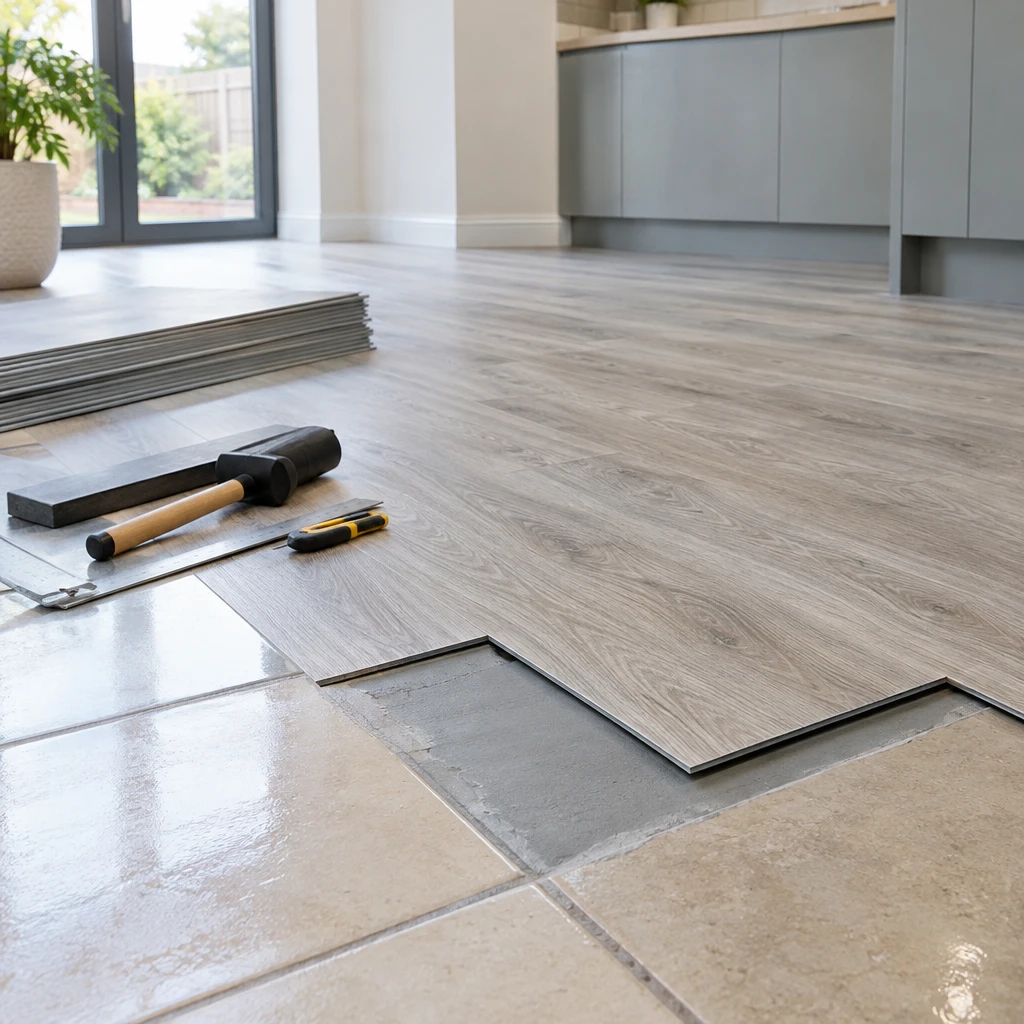
Yes, LVT can be laid over existing tiles or some other flooring if the surface is sound, dry, stable, clean and sufficiently flat. The existing floor must not move underfoot or contain defects that could affect the new finish. Loose tiles, deep grout lines, moisture and uneven areas usually need attention before installation.
The answer also depends on the type of luxury vinyl tile being fitted. Glue-down LVT generally requires a very smooth and carefully prepared base because the material follows the surface beneath it. Click LVT uses an interlocking system but still needs a level and stable subfloor. It should not be treated as a way to conceal an unsuitable floor.
A flooring survey is the safest way to establish whether covering the existing surface is appropriate. The installer can assess the substrate, proposed LVT system, floor height and room conditions before recommending preparation or removal.
Can LVT be laid over existing tiles safely?
LVT can often be installed over ceramic or porcelain tiles when every tile is securely bonded and the tiled surface meets the flooring manufacturer’s requirements. Tiles that rock, sound hollow or have cracked around areas of movement may indicate that the base is not reliable enough to cover without repair.
Grout joints are another important consideration. Wide or recessed joints can show through glue-down LVT over time. This effect is known as telegraphing. Raised tile edges and textured tile faces can cause similar problems by creating visible or detectable variations in the finished floor.
A suitable primer and smoothing compound may be applied to create a continuous surface. The precise preparation system must be compatible with the tiles, subfloor and LVT adhesive. Glazed or highly polished tiles can require specific preparation to help the chosen products bond correctly.
Existing tiles should also be checked for contamination. Grease, cleaning residues, wax and dust can interfere with primers or adhesives. Cleaning alone will not repair movement or correct significant changes in level.
Glue-down LVT and click LVT need different preparation
Glue-down LVT is bonded directly to the prepared substrate while click LVT is usually installed as a floating floor. Both systems need a suitable base but the preparation details are not identical.
Glue-down LVT
Glue-down LVT normally needs a smooth and consistently absorbent installation surface. Grout lines, old adhesive ridges and minor depressions can affect its appearance. A flooring contractor may use a compatible smoothing compound to produce the required finish before applying adhesive.
This system can keep the finished floor relatively low and provides a firmly bonded surface. However, it places greater emphasis on preparation because imperfections beneath flexible tiles or planks may remain visible.
Click LVT
Click LVT can sometimes be fitted over a sound tiled floor without covering every grout line. That does not mean the base can be uneven. Excessive variation may strain the joints or allow movement when the floor is walked on.
Some click products have an attached backing while others require a specified underlay. Adding an unsuitable underlay can make the floor too flexible and may conflict with the product instructions. The complete installation should follow the manufacturer’s guidance.
Which existing floors can be covered with LVT?
Suitability depends on the condition and construction of the existing floor rather than its appearance alone. The following surfaces each require a different assessment.
Ceramic and porcelain tiles
Tiles may be retained if they are secure, level and free from significant damage. Loose sections need to be repaired and deep joints may need to be filled or covered with a smoothing system. Unexplained cracking should be investigated because it can indicate movement below the tiles.
Existing vinyl flooring
Some firmly bonded and non-cushioned vinyl floors can remain beneath a compatible LVT system. Soft, damaged, embossed or poorly bonded vinyl is less suitable. Multiple layers may create movement or conceal moisture and defective areas.
Older resilient flooring or adhesive can contain materials that must not be disturbed without proper identification. If the age or composition is uncertain, specialist testing or advice may be required before sanding, scraping or removal.
Timber floors and floorboards
Timber substrates must be rigid and securely fixed. Loose boards, protruding fixings and excessive movement should be corrected. Depending on the floor construction, a suitable flooring-grade overlay or another approved preparation system may be needed to prevent board joints from affecting the LVT.
Timber movement can be influenced by ventilation and moisture conditions. Covering a timber floor without understanding the cause of movement may transfer the problem to the new finish.
Laminate, carpet and floating floors
Carpet and underlay must normally be removed because they do not provide a firm base for LVT. Laminate and floating vinyl floors should also usually be removed. A floating surface can move independently and is not a stable substrate for another floor covering.
Removal also gives the installer access to the structural subfloor. Hidden damp, damaged boards or uneven concrete can then be identified and treated correctly.
Why flatness, stability and moisture matter
LVT performs best on a dry, flat and stable substrate. These requirements affect the appearance of the floor and the integrity of its joints or adhesive bond.
Flatness: high spots and depressions can create visible unevenness or place pressure on click joints.
Stability: loose tiles and moving boards can cause the new floor to flex or separate.
Moisture: excess moisture can affect adhesives and smoothing products or indicate a wider building issue.
Cleanliness: dust, polish, grease and incompatible residues can prevent preparation products from bonding.
A floor can look dry without meeting the requirements of the selected system. Where moisture is a concern, appropriate testing should be completed. The result may show that additional drying time, a compatible surface damp-proof membrane or remedial work is needed. The correct response depends on the substrate and the source of moisture.
Installing LVT over a defective surface does not remove the defect. It can conceal warning signs temporarily while allowing the underlying issue to continue.
Floor height, doors and room fittings must be checked
Covering tiles rather than removing them raises the finished floor level. The increase may appear small but it can affect doors, thresholds, skirting details, kitchen plinths and the transition into neighbouring rooms.
Built-in appliances also need consideration. Raising the floor in front of an appliance can reduce the clearance needed for future removal. External and internal doors must open safely with sufficient clearance above the finished surface.
Changes in height can be particularly important at entrances or between different floor coverings. Suitable profiles may be required to create a neat transition. The proposed arrangement should not introduce an avoidable trip edge.
Removing old flooring can sometimes provide a better overall level but removal may add labour and reveal further preparation needs. Retaining tiles may reduce disruption when the existing installation is genuinely suitable. The decision should be based on the complete room rather than installation speed alone.
Can LVT go over tiles with underfloor heating?
LVT may be compatible with some underfloor heating systems but the flooring, adhesive, preparation products and heating arrangement must all be approved for use together. Existing tiles do not automatically make the complete build-up suitable.
The installer needs to understand whether the heating is electric or water-based and where it sits within the floor construction. The LVT manufacturer may specify operating limits plus procedures for reducing and gradually restoring the temperature around installation.
Floor coverings and underlays add thermal resistance. A build-up containing tiles, smoothing compound, underlay and LVT may affect heat transfer. The system designer’s information and flooring manufacturer’s instructions should be reviewed before work begins.
When should the existing floor be removed?
Removal is usually the better option when the current floor is unstable, damp, heavily uneven or unsuitable for bonding. It may also be necessary when retaining the floor would create unacceptable height problems.
Tiles are loose or affected by widespread cracking.
The existing floor flexes or moves under normal foot traffic.
There are multiple layers of old flooring with uncertain adhesion.
Moisture is trapped or the source of damp has not been resolved.
The surface contains extensive contamination or incompatible coatings.
Doors, appliances or thresholds cannot accommodate the additional height.
The flooring manufacturer does not approve installation over that surface.
Local repairs may be sufficient where defects are limited and their cause is understood. Widespread failure usually needs a more complete solution. Removing the covering also allows direct inspection of the structural base.
How a professional LVT assessment helps
A professional assessment establishes whether the existing flooring can form part of a reliable installation. The contractor should identify the substrate, inspect its condition and consider the room’s normal use. Domestic kitchens, retail areas and office spaces can place different demands on a floor.
The assessment may include checking surface regularity, looking for movement and deciding whether moisture testing is appropriate. The installer can then recommend a glue-down or click system plus the necessary primers, smoothing products or repairs.
All Type Flooring supplies and installs LVT flooring for homes and businesses in Kent. A site assessment can help determine whether existing tiles should be prepared and retained or removed before the new LVT is fitted.
Frequently Asked Questions
Can a damaged LVT plank be replaced after installation over tiles?
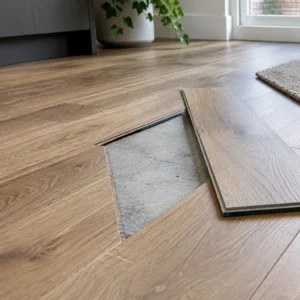
A damaged plank may be replaceable but the method depends on the system. Glue-down planks can often be lifted individually with care. Replacing a click plank may require the floor to be dismantled from the nearest edge or repaired using a product-specific method.
Do tiles always need primer before LVT is fitted?
Not always. Primer requirements depend on the tile surface plus the smoothing compound or adhesive being used. Glazed tiles and non-absorbent surfaces often need a compatible preparation system. The product instructions and site assessment should determine the specification.
Will LVT make a tiled floor feel warmer?
LVT can feel less cold underfoot than exposed ceramic tile but it should not be treated as insulation. The result depends on the floor construction, room temperature, LVT type and any approved backing or underlay.
How soon can a room be used after LVT installation?
The waiting time depends on whether the LVT is glue-down or click flooring and on the preparation products used. Adhesives and smoothing compounds may need defined drying or curing periods. Follow the installer’s advice and the relevant product instructions before replacing furniture or allowing heavy traffic.
Book an LVT flooring assessment for your Kent property.