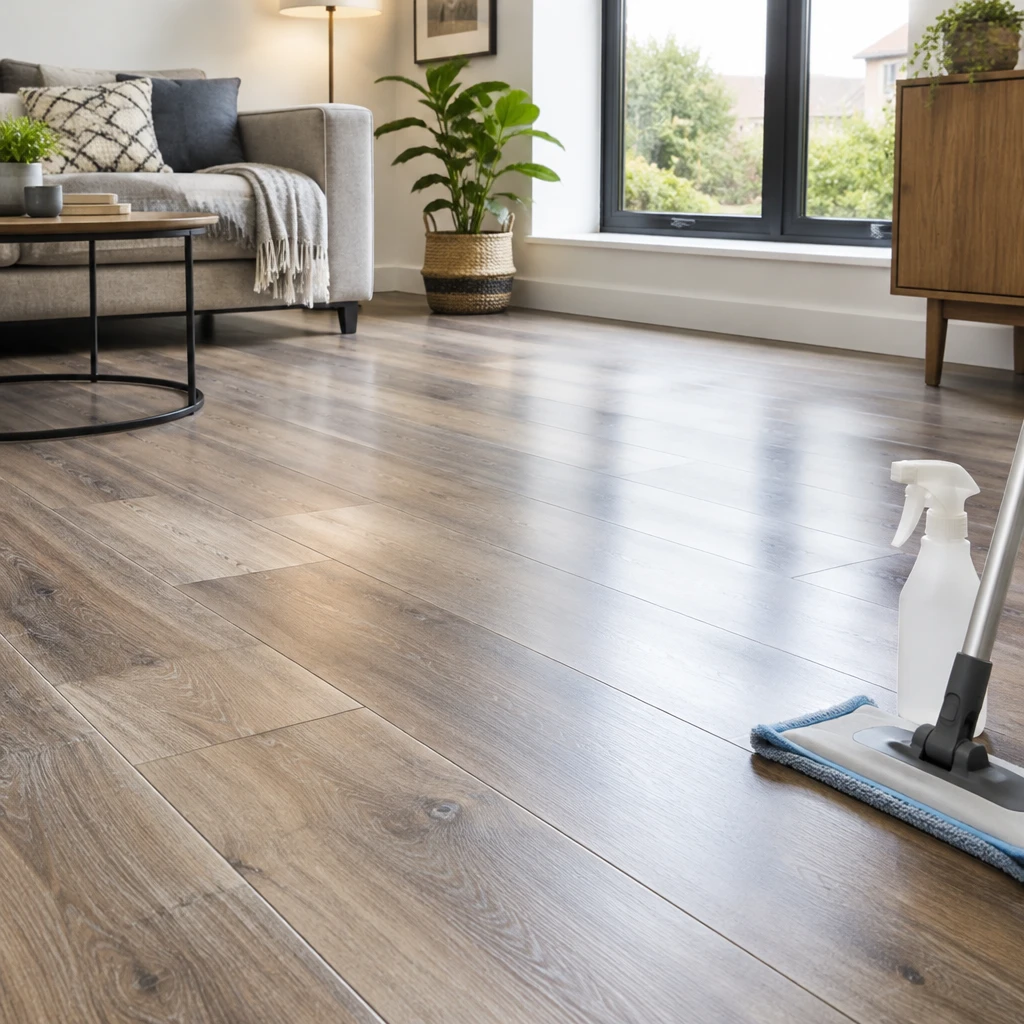
To clean LVT flooring, remove loose grit with a soft broom or suitable vacuum then mop with a well-wrung microfibre mop and a cleaner approved for luxury vinyl tile. Wipe up spills promptly and avoid abrasive tools, harsh chemicals, excessive water and unapproved steam cleaning. Regular light cleaning is usually safer and more effective than occasional aggressive scrubbing.
LVT is designed to provide a practical floor finish but it still needs appropriate care. Dirt can act like an abrasive under shoes while unsuitable cleaning products may leave residue or affect the floor\’s protective surface. The correct method can vary according to the LVT product, its finish and whether it is a glue-down or click system. Always check the flooring manufacturer\’s care instructions where available.
How to clean LVT flooring day to day
The best everyday routine is to remove dust, crumbs, hair and grit before they are walked across the floor. A soft broom, dust mop or vacuum with a hard-floor setting can handle most loose debris without unnecessary friction.
Vacuum or sweep the floor first
Vacuuming before mopping prevents loose particles from being moved around in dirty water. Use a soft floor head and switch off any rotating brush or beater bar unless the vacuum manufacturer confirms that it is suitable for resilient flooring. Pay particular attention to entrances, kitchen work areas and the edges of rooms where grit tends to collect.
Damp mop rather than soaking the surface
Use clean warm water with a small amount of LVT-compatible cleaner. Wring the mop thoroughly so that it is damp rather than dripping. Work across manageable sections and change the water when it becomes cloudy.
Although LVT has a water-resistant surface, standing water should not be left around joints, edges or thresholds. Moisture can reach vulnerable areas of the flooring system or the subfloor depending on the product and installation method. Clean up remaining moisture and allow the floor to dry before replacing rugs or allowing heavy foot traffic.
Choose suitable LVT cleaning products and tools
A pH-neutral cleaner labelled as suitable for vinyl or LVT is normally the safest starting point. The product should be diluted exactly as directed because using extra cleaner can create a sticky film that attracts more dirt.
Useful cleaning equipment includes:
A soft broom or dust mop
A vacuum with a suitable hard-floor attachment
A well-wrung microfibre mop
Soft white cloths for spills and marks
An LVT-compatible neutral cleaning solution
Clean water for rinsing if the product instructions require it
Avoid scouring pads, wire brushes, abrasive powders and solvent-based products unless the LVT manufacturer specifically approves them. Washing-up liquid is not an ideal routine floor cleaner because repeated use may leave a dull or slippery residue. Bleach, ammonia and concentrated disinfectants can also be unsuitable or may require careful dilution. Product compatibility matters more than how powerful a cleaner appears to be.
Remove spills and stains without damaging LVT
Blot spills quickly with an absorbent cloth then clean the affected area using an approved solution. Prompt action reduces the chance of staining and prevents liquids from spreading into joints or beneath furniture.
Food, drink and everyday dirt
Lift any solid material carefully then blot the liquid rather than rubbing it across a wider area. Wipe with a damp cloth and a small amount of neutral cleaner. If required by the cleaner instructions, wipe again with clean water and dry the area.
Grease, ink and stubborn marks
Start with the mildest approved method. Apply a small amount of compatible cleaner to a cloth rather than pouring it directly onto the floor. Test any unfamiliar product in an inconspicuous area first. Ink, dye, adhesive or chemical stains may need product-specific advice because a strong solvent can alter the finish or spread the mark.
Scuffs from footwear or furniture
Many surface scuffs can be loosened with a damp microfibre cloth and gentle pressure. Do not use a sharp blade or abrasive sponge. If a mark does not respond to normal cleaning, check whether it is a stain, transferred material or physical damage before trying a stronger method.
Prevent scratches, dents and discolouration
Preventive maintenance protects LVT more effectively than frequent deep cleaning. Most avoidable damage comes from tracked-in grit, dragged furniture, concentrated pressure or unsuitable contact materials.
Place effective entrance matting at external doors to capture grit and moisture.
Choose mats that are suitable for vinyl flooring because some rubber or latex backings may react with certain products.
Fit clean felt pads or appropriate glides beneath chair and furniture legs.
Lift furniture instead of dragging it across the floor.
Use suitable protection when moving appliances or other heavy items.
Keep pet claws maintained to reduce surface scratching.
Protect the floor during decorating or building work with a breathable covering that will not transfer colour or adhesive.
Heavy furniture can create pressure points. Wider furniture cups may help distribute the load but suitability depends on the item and flooring system. Strong sunlight may also affect flooring and furnishings over time. Blinds or curtains can reduce intense exposure in bright rooms although the correct approach depends on the property and product.
Avoid common LVT cleaning mistakes
The main LVT cleaning mistakes are using too much water, applying excessive detergent and trying unapproved high-heat or abrasive methods. These approaches can create residue or place unnecessary stress on the surface and joints.
Do not assume that a steam mop is safe because LVT is a vinyl product. Heat and moisture may affect joints, adhesives or the surface finish. Only use steam cleaning when the flooring manufacturer expressly permits it and follow the stated settings.
Wax, household polish and oil-based treatments should not be applied unless they form part of an approved maintenance system. LVT does not normally need traditional floor wax and an unsuitable coating can make the surface slippery or difficult to maintain. Avoid flooding the floor and do not allow dirty cleaning water to dry on the surface.
Newly fitted glue-down LVT may also have restrictions on early wet cleaning while the adhesive cures. Follow the installer or adhesive manufacturer\’s instructions because curing requirements vary with the system and site conditions.
Plan maintenance for homes and businesses
Cleaning frequency should reflect foot traffic, weather, room use and the amount of dirt entering the building. A quiet bedroom needs a different routine from a shop entrance, office corridor or busy family kitchen.
Domestic LVT maintenance
In a home, remove visible grit regularly and damp mop when the floor needs it. Kitchens, hallways and utility areas generally need more attention than low-traffic rooms. Deal with spills as they occur rather than waiting for the next full clean.
Commercial LVT maintenance
Commercial premises benefit from a written cleaning plan that covers entrance matting, daily debris removal, spill response and periodic machine cleaning where appropriate. Any rotary machine, pad and chemical must be suitable for the particular LVT finish. Traffic levels, opening hours and health and safety arrangements should shape the method.
Cleaning teams should also understand the difference between cleaning and restoring a damaged finish. Repeated machine scrubbing cannot repair deep scratches, lifted tiles or movement within the flooring system. Commercial maintenance recommendations may be product-specific so consult the flooring documentation or a flooring professional before introducing new equipment.
Know when LVT needs more than cleaning
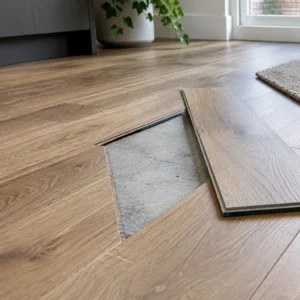
Cleaning will remove surface contamination but it will not correct loose edges, open joints, deep gouges, persistent bubbling or movement underfoot. These signs can relate to impact damage, subfloor conditions, moisture, adhesive performance or installation details.
Seek professional advice if tiles are lifting, joints continue to open or moisture repeatedly appears around an edge. The cause cannot be confirmed from appearance alone and repairs depend on the flooring construction and site conditions. Avoid forcing adhesive beneath a loose section without identifying the product and the reason for the failure.
A flooring specialist can also advise whether an individual plank or tile may be replaceable. Feasibility depends on the LVT system, the position of the damaged piece, access and the availability of a suitable match. Colour and appearance can differ between production batches or after exposure in the room.
Use a simple LVT maintenance routine
A practical routine is to remove grit frequently, wipe spills immediately and damp mop with an approved cleaner when required. Inspect entrance matting and furniture protection regularly. Address unexplained movement or moisture instead of trying to conceal it with cleaning products.
For the best product-specific result, retain the manufacturer\’s maintenance guide and details of the fitted flooring. If those details are unavailable, use mild methods and ask a flooring professional before applying specialist chemicals, coatings or machinery. Appropriate care helps preserve the appearance and day-to-day performance of LVT without exposing the floor to unnecessary treatment.
Frequently Asked Questions
Can a robot vacuum be used on LVT flooring?
A robot vacuum can usually be used if it has a hard-floor mode and clean non-abrasive wheels and brushes. Check both the vacuum guidance and the LVT care instructions. Remove trapped grit from the machine regularly to prevent it being dragged across the floor.
How should LVT be cleaned after building or decorating work?
Vacuum loose dust with a suitable hard-floor attachment then damp clean using an approved neutral cleaner. Do not scrape dried paint or adhesive with a blade. Identify the substance first and ask for product-specific advice if normal cleaning does not remove it.
Can you disinfect LVT flooring?
Yes if the disinfectant is approved for the specific LVT and used at the correct dilution and contact time. Some concentrated chemicals may affect the finish or leave residue. In workplaces the cleaning method should also reflect the site\’s hygiene policy and risk assessment.
Why does LVT still look dull after mopping?
Dullness may be caused by detergent residue, dirty water, fine grit or an unsuitable cleaning product. Try the manufacturer\’s recommended method with clean equipment. If the appearance does not improve, the surface may be worn or damaged rather than simply dirty.
Contact All Type Flooring for advice on selecting or fitting LVT flooring in Kent.