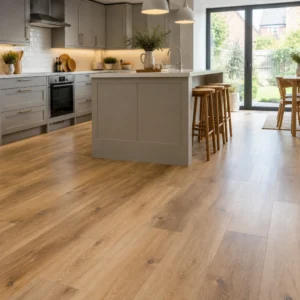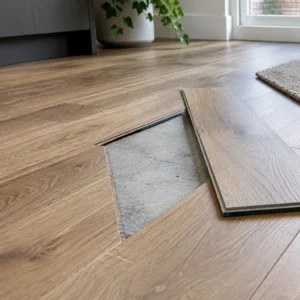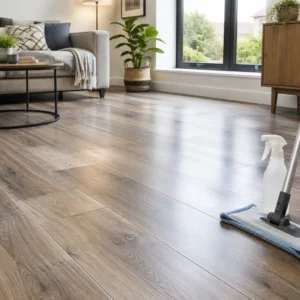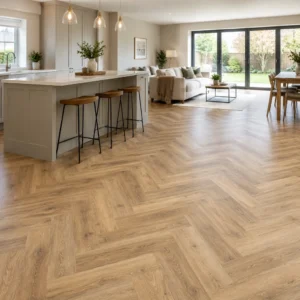
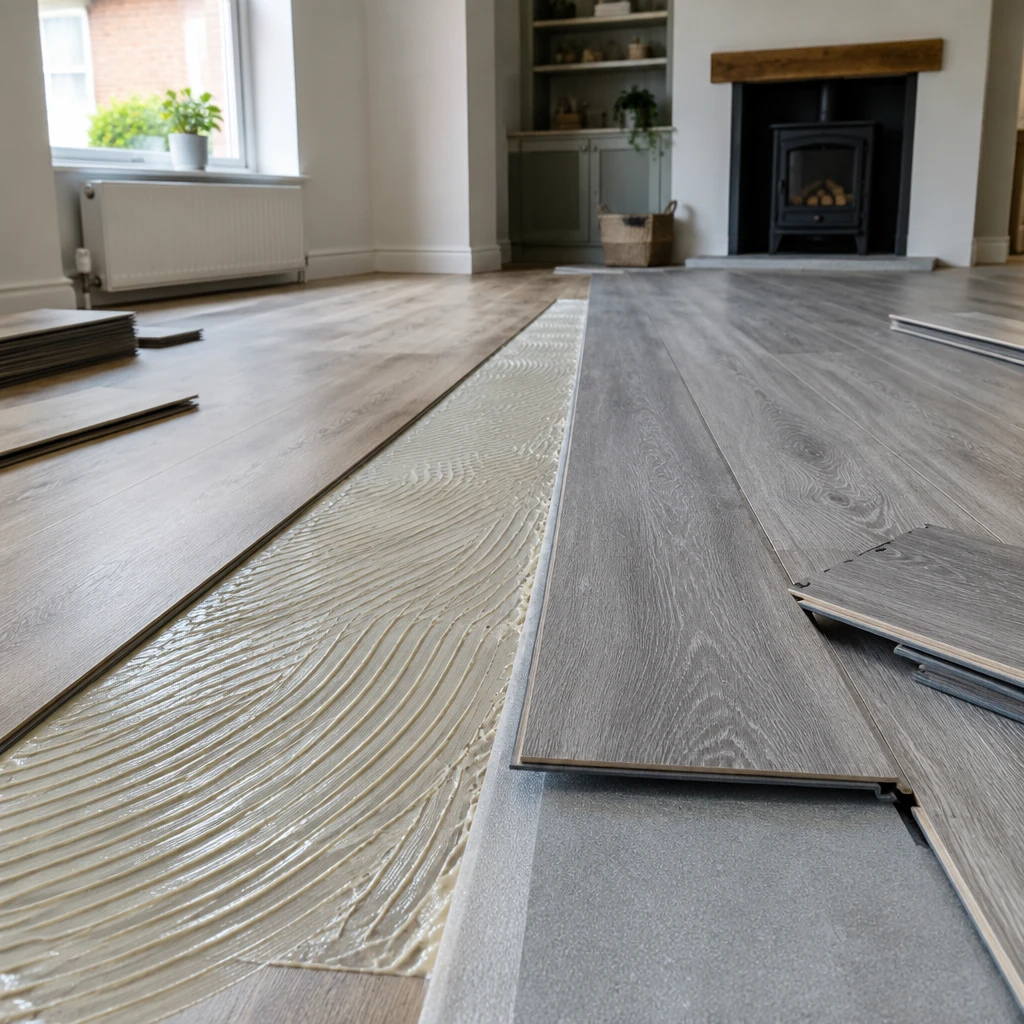
The choice between glue down vs click LVT usually depends on the subfloor, room size, expected foot traffic and installation priorities. Glue down LVT is bonded directly to a prepared subfloor. It is often preferred for busy commercial areas, larger spaces and projects where a low floor build-up matters. Click LVT uses interlocking edges to create a floating floor. It can be quicker to fit and may suit many domestic rooms where the correct expansion space is available.
Neither method is automatically best for every property. The right option depends on site conditions as well as the flooring product itself. A flooring survey can identify moisture risks, subfloor movement, uneven areas and transitions that may affect the specification.
Glue Down vs Click LVT: The Quick Answer
Choose glue down LVT when stability, a low profile and straightforward replacement of individual tiles are priorities. Choose click LVT when installation speed, reduced adhesive use and a floating construction are more important. Product instructions and site conditions should always guide the final decision.
Glue down LVT: commonly suited to busy spaces, fitted furniture layouts, larger continuous areas and commercial premises.
Click LVT: commonly suited to domestic rooms, renovation projects and installations where a floating floor is appropriate.
Both systems: require a sound, clean and suitably level base. Neither should be used to hide serious subfloor defects.
Room shape also matters. Narrow corridors, multiple doorways, heavy fixed units and changes between floor finishes can make one system more practical than another. Manufacturer limits for floor area, expansion gaps and transition profiles must be followed.
How the Two LVT Systems Are Constructed
What is glue down LVT?
Glue down LVT consists of individual planks or tiles fixed to the subfloor with a compatible flooring adhesive. The adhesive type and application method depend on the product, subfloor and environment. Because the floor is bonded rather than floating it normally has little vertical movement underfoot.
The construction can produce a slim finished floor which may help around doors, thresholds and adjoining surfaces. Accurate preparation is essential because ridges, hollows and contamination can affect the appearance or bond. Timber bases may need appropriate boarding while concrete or screeded floors may need smoothing and moisture management.
What is click LVT?
Click LVT has profiled edges that lock neighbouring planks or tiles together. The assembled surface floats over the base instead of being permanently bonded to it. Some products have an attached backing while others require a specific separate underlay. An extra underlay must not be added unless the manufacturer permits it.
A floating floor needs suitable expansion space around walls, pipes, door frames and fixed objects. Large areas or adjoining rooms may also require movement breaks or transition profiles. These details depend on the click system and room layout rather than on a single rule for all LVT.
Subfloor Preparation and Installation
Both types of LVT need careful subfloor assessment even though their installation methods differ. Click flooring may tolerate very minor surface variation better than a thin bonded product but it cannot correct an uneven or unstable floor. Poor preparation can lead to movement, visible imperfections, damaged joints or an unsatisfactory finish.
A professional assessment may consider:
whether the base is concrete, screed, timber, existing tiles or another material
surface flatness and local high or low spots
residual construction moisture or damp risks
cracks, loose boards and movement between panels
old adhesive residues, paint, dust or contamination
finished height at doors, skirting and neighbouring rooms
compatibility with underfloor heating
Glue down installation usually involves more preparation stages and careful adhesive application. Tiles must be positioned accurately because adjustment may become harder as the adhesive develops its bond. Click planks are assembled in sequence and fitting can be relatively fast in a clear rectangular room. Complex cuts and restricted doorways can still add time.
Existing flooring should not be assumed to be a suitable base. Some surfaces can remain after inspection and preparation while others need removal. Older adhesive or floor materials may require specialist assessment before disturbance.
Which LVT Is Better for Different Rooms?
Glue down LVT is often selected for high-traffic or heavily furnished spaces while click LVT can be practical in many standard domestic rooms. The product must also be approved for the intended setting.
Kitchens and utility spaces
Both systems may be suitable for kitchens if the chosen product supports that use and the subfloor is properly prepared. Glue down flooring can work well around fitted layouts because individual planks are bonded in position. A floating click floor must not normally be trapped beneath fixed cabinetry unless the product instructions specifically allow it.
LVT is easy to wipe clean but water resistance does not remove the risk of moisture reaching joints, edges or the subfloor. Leaks should be addressed promptly. Perimeter details and sealing requirements depend on the system.
Living rooms and bedrooms
Click LVT is a common option for living rooms and bedrooms because it can provide a practical floating installation. Glue down LVT may be preferable where a lower transition is needed or where the flooring continues through connected areas. Acoustics, furniture loads and the condition of the base should form part of the decision.
Shops, offices and other commercial interiors
Glue down LVT is frequently considered for commercial flooring because the bonded construction handles rolling loads and concentrated traffic without relying on click joints. However the LVT wear classification, adhesive, subfloor and maintenance plan must all suit the premises. A click system may still be appropriate for some commercial settings if its technical specification permits that use.
Comfort, Noise and Underfloor Heating
Click LVT can feel slightly more cushioned when used with an approved backing or underlay while glue down LVT often feels firmer underfoot. The actual result varies by product and subfloor construction.
Impact sound is influenced by the entire floor build-up rather than by the fixing method alone. In flats or shared buildings the relevant lease conditions, acoustic requirements and building design should be checked before installation. A thicker underlay is not always better because excessive movement can damage click joints.
Many LVT products can be used with suitable underfloor heating but compatibility must be confirmed. Maximum surface temperatures, heating commissioning and gradual temperature changes usually need to follow the flooring and heating manufacturers’ guidance. Glue down systems can offer efficient heat transfer due to their close contact with the base. Click products may include additional layers that affect thermal resistance.
Durability, Repairs and Maintenance
Durability depends more on product quality, wear layer, installation and use than on the words glue down or click. A correctly specified floor is better placed to cope with the conditions for which it was selected.
Bonded LVT can be useful where a damaged plank may need individual replacement. The affected piece can potentially be lifted and a matching replacement bonded into the space. The procedure requires care and spare material should be retained because colours and patterns can vary between production batches.
Replacing a click plank may involve dismantling the floor from the nearest edge. Some repair methods allow a plank to be cut out and replaced but suitability depends on the locking system and manufacturer guidance. Click joints can also be vulnerable if the floor bridges uneven areas or is restricted from moving.
Routine care is similar for both types. Remove grit regularly, wipe spills promptly and use cleaning products approved for LVT. Protective feet can reduce marking from furniture. Heavy items should be moved carefully rather than dragged across the surface. Steam cleaning should only be used if the flooring manufacturer explicitly approves it.
Cost, Installation Time and Disruption
Click LVT may reduce fitting time in a simple room but it is not always the lower-cost project overall. Material price, preparation, underlay, trims, door adjustments and waste all affect the final quotation.
Glue down LVT often involves greater labour and preparation because the bonded finish follows the surface below closely. It may also require waiting periods for smoothing compounds or adhesives. The advantage is a stable low-profile floor that can suit demanding layouts.
Click LVT can be installed without spreading adhesive across the full area. This may simplify some renovation projects. However poor subfloors still need correction and suitable expansion details remain essential. If skirting is not being removed the project may also need edge trims.
Business owners should consider operational disruption as well as installation price. Phased fitting, access routes, furniture movement and adhesive curing may influence the choice. The safest programme depends on the premises and chosen system.
How to Make the Final Choice
Base the decision on the room and subfloor first then compare suitable LVT designs within the correct system. Choosing by colour alone can lead to avoidable installation compromises.
Choose glue down LVT if the project needs a slim build-up, strong positional stability or easier access to individual tiles for future repairs.
Choose click LVT if a floating installation suits the room and a quicker fitting process is a key priority.
Check whether fixed units, islands or heavy equipment will restrict a floating floor.
Confirm moisture readings and any required damp protection before fitting.
Review underfloor heating limits and acoustic requirements where relevant.
Check door clearances, thresholds and changes in floor height.
Use a product rated for the expected domestic or commercial conditions.
Glue down and click LVT can both create an attractive practical floor when correctly specified. A site visit gives a flooring professional the information needed to recommend a system rather than relying on a general preference. For properties in Kent this assessment can also support accurate planning for preparation, fitting and transitions into adjoining rooms.
Frequently Asked Questions
Can LVT be fitted over existing ceramic tiles?
LVT can sometimes be fitted over sound ceramic tiles after assessment and preparation. Loose tiles, deep grout lines and uneven areas must be addressed. A smoothing compound may be needed and finished floor height should be checked at doors and thresholds.
Does every click LVT floor need underlay?
No. Some click LVT includes an attached backing while other products require a specified underlay. Adding an unapproved layer can create too much movement and may affect the locking joints. Follow the product instructions.
Can LVT run continuously between several rooms?
It may be possible but the answer depends on the installation system, total area, doorway arrangement and manufacturer limits. Click LVT may need movement breaks or profiles. Glue down LVT can suit continuous layouts but subfloor joints and transitions still require planning.
How soon can you walk on newly fitted LVT?
The timing depends on the product and installation method. Click flooring may accept light foot traffic relatively quickly once completed. Glue down LVT may need time for the adhesive to set before walking, cleaning or replacing furniture. Follow the fitter’s advice and adhesive guidance.
Arrange an LVT flooring survey for your Kent home or business.