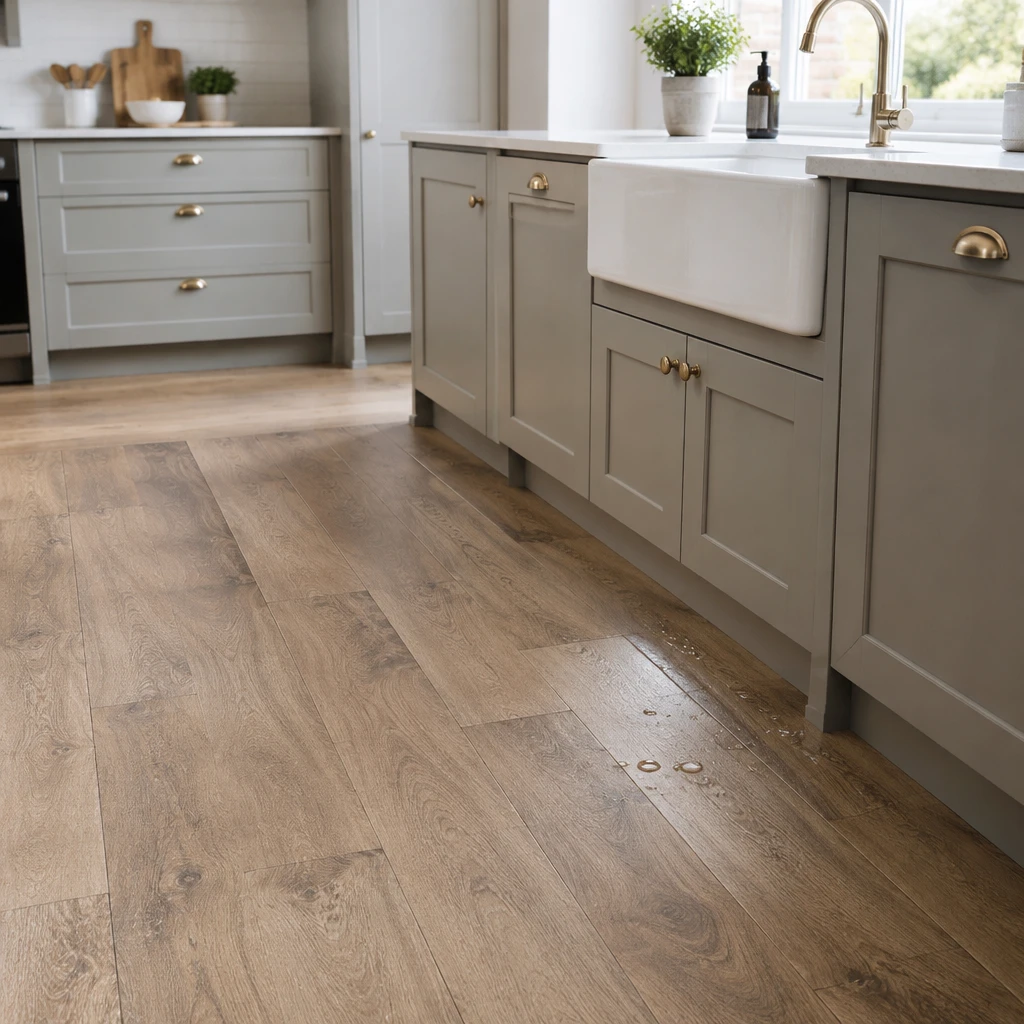
Is LVT flooring waterproof? The vinyl material used in LVT does not normally absorb water so many LVT products are described as waterproof. However the complete floor should not automatically be treated as a watertight barrier. Water can still pass through joints or around room edges and reach the subfloor beneath.
This distinction matters when choosing flooring for a kitchen, bathroom, utility room or commercial space. LVT can be a practical option in areas where splashes and routine spills are expected. Its performance still depends on the product specification, subfloor preparation, installation method and how quickly standing water is removed.
What Does Waterproof LVT Flooring Mean?
Waterproof LVT flooring means that the flooring material itself is not usually damaged by ordinary contact with water when used within the manufacturer\’s stated conditions. The surface can generally be wiped or damp cleaned without the material absorbing moisture in the way that some wood-based floors can.
Waterproof does not necessarily mean that an installed LVT floor forms a sealed tank. The following parts of the flooring system can affect how it handles water:
Joints between individual tiles or planks
Gaps around walls, pipes and doorways
The adhesive or click-locking system
The condition and moisture level of the subfloor
Transitions into neighbouring rooms
Sealant used where the product instructions require it
Product descriptions should therefore be read carefully. A manufacturer may describe the LVT itself as waterproof while placing specific conditions on installation, cleaning or use in wet areas.
Waterproof Versus Water-Resistant Flooring
Waterproof flooring is designed so that the main flooring material does not absorb water under its intended conditions. Water-resistant flooring can tolerate limited moisture but may be affected by prolonged exposure or standing water.
These terms can vary between manufacturers so the technical information for the specific product matters more than a general label. The documentation should explain where the floor can be fitted and whether any areas are excluded. It may also set out requirements for perimeter sealing, adhesives and subfloor moisture testing.
LVT often offers stronger resistance to surface moisture than flooring made with moisture-sensitive wood-based cores. Some rigid vinyl products have a separate core construction so it is important not to assume that every floor sold under a broad vinyl category behaves in exactly the same way.
Can LVT Be Used in Kitchens and Bathrooms?
LVT is commonly considered for kitchens and bathrooms because it is easy to wipe clean and can cope with normal splashes when the chosen product is suitable for the room. The installation must follow the product guidance and the floor should not be relied upon as the room\’s only waterproofing measure.
LVT flooring in kitchens
Kitchens expose floors to drink spills, cooking splashes and water from sinks or appliances. Suitable LVT can perform well in this setting because spills can be removed from the surface without soaking into the vinyl.
Leaks from dishwashers, washing machines or water supplies create a different risk. A slow leak can travel beneath the floor before it becomes visible. Water may then affect the screed, timber deck, smoothing compound or other materials below. Appliance connections and plumbing should be checked when unexplained dampness appears.
LVT flooring in bathrooms
A bathroom-suitable LVT product can be used where water droplets and occasional splashes are expected. Water should still be removed rather than left to collect at wall edges or around sanitary fittings.
A bathroom floor is different from a waterproof shower enclosure. LVT should not be assumed suitable inside a shower area unless the manufacturer specifically approves that application as part of a correctly designed wet-area system. In a wet room the waterproofing strategy depends on the entire build-up including drainage, falls, tanking and compatible finishes. Professional assessment is advisable.
Utility rooms and commercial areas
Utility rooms may face appliance leaks, wet footwear and frequent cleaning. Commercial premises can also have heavier foot traffic or particular hygiene requirements. The LVT should have a specification appropriate for the expected use as well as the moisture conditions. The installer may also need to consider entrances, cleaning regimes and movement of equipment.
How Glue-Down and Click LVT Handle Water
Both glue-down LVT and click LVT can have water-resistant vinyl surfaces. Their installation systems differ so the right choice depends on the room, subfloor and product specification.
Glue-down LVT
Glue-down LVT is bonded directly to a properly prepared subfloor using a compatible adhesive. Because each tile or plank follows the surface beneath it closely the preparation must be smooth, sound and suitable for bonding.
The adhesive does not make an unsuitable or damp subfloor safe. Excess moisture below the flooring can interfere with the bond or affect preparation materials. Moisture testing and any required damp-proof system should be addressed before fitting. The correct process depends on the subfloor type and measured conditions.
Click LVT
Click LVT is installed as a floating floor with planks or tiles locking together. Some products have highly water-resistant joints but water can still enter around edges, cut sections or damaged connections. Expansion clearances must be maintained according to the installation instructions rather than filled indiscriminately.
Underlay requirements also vary. Some products include an attached backing while others require an approved underlay or no separate underlay at all. Using an unapproved material can affect joint support and floor movement.
Why the Subfloor Matters
A waterproof LVT surface cannot correct moisture problems beneath it. The subfloor must be stable, clean, dry enough for the selected system and prepared to the standard required by the manufacturer.
Common subfloors include concrete, screed and timber-based boards. Each can present different issues. Concrete or screed may retain construction moisture or be affected by moisture from below. Timber subfloors can move or deteriorate if exposed to leaks. Existing floor coverings may also need removal before the true condition can be assessed.
Typical preparation considerations include:
Testing moisture levels where required
Investigating visible damp or unexplained staining
Repairing loose, cracked or uneven areas
Using compatible primers and smoothing compounds
Confirming whether a damp-proof membrane is present or required
Allowing preparation materials to cure correctly
The exact preparation cannot be decided from the room type alone. Site conditions, product instructions and moisture readings should guide the installation plan.
What Happens If Water Gets Under LVT?
Water beneath LVT can become trapped and may affect the adhesive, smoothing compound, underlay or subfloor. It can also contribute to odours or microbial growth where moisture remains for an extended period.
A small surface spill that is wiped up promptly is very different from a flood or concealed plumbing leak. If water has entered beneath the floor the correct response depends on the water source, duration of exposure, subfloor construction and scale of the affected area.
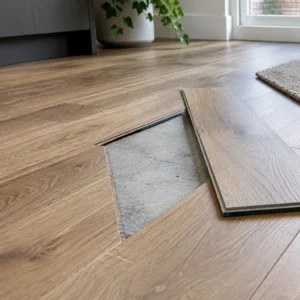
After significant water ingress it may be necessary to lift part or all of the floor so the build-up can be inspected and dried. Reusing lifted LVT depends on the product and how it was installed. Glue-down tiles may not be reusable while click joints can be damaged during lifting. A flooring professional should inspect the area before replacement decisions are made.
How to Protect LVT from Moisture Problems
LVT does not need to be treated as fragile around everyday splashes but sensible care helps protect the full flooring system. Prompt action also makes it easier to identify leaks before they spread.
Wipe up spills and standing water as soon as practical.
Use mats at external entrances to catch rain and grit.
Avoid saturated mopping and follow the product\’s cleaning guidance.
Check appliance hoses, waste pipes and seals periodically.
Do not drill or fix through the floor without understanding what lies beneath.
Replace damaged sealant where the installation design requires sealed junctions.
Investigate lifting edges, loose tiles or persistent odours rather than covering them.
Steam cleaning is not suitable for every LVT product. Heat and concentrated moisture may affect joints or adhesives so the manufacturer\’s maintenance instructions should be checked before using a steam mop.
How to Choose LVT for a Moisture-Prone Room
Choose LVT by considering the complete room and installation rather than focusing only on the word waterproof. A suitable floor should match the level of use, likely water exposure, subfloor and cleaning requirements.
Before making a decision ask:
Is the product approved for the intended room?
Does the guidance require perimeter sealing or a specific adhesive?
Is the subfloor suitable and within the permitted moisture level?
Will the floor be exposed to normal splashes or frequent standing water?
Is click LVT or glue-down LVT more appropriate for the space?
Are there fixed units, floor drains or unusual junctions to consider?
Is the product compatible with any underfloor heating system?
A site assessment can identify uneven surfaces, existing moisture and difficult details around doorways or sanitary fittings. All Type Flooring supplies and fits LVT for domestic and commercial properties in Kent with recommendations based on the room and subfloor conditions.
In summary LVT itself is generally highly resistant to water and many products are marketed as waterproof. The installed floor is only as dependable as its joints, edges, subfloor preparation and installation method. Check the specific product guidance and address any underlying moisture issue before fitting.
Frequently Asked Questions
Can LVT be fitted over underfloor heating?
Many LVT products can be used with compatible underfloor heating but temperature limits and installation requirements vary. The heating system, subfloor, adhesive and LVT specification must work together. The system should be operated according to the flooring manufacturer\’s guidance before, during and after installation.
Will bathroom sealant make an LVT floor fully waterproof?
Sealant can protect specified perimeter junctions but it does not turn the whole floor into a waterproof wet-room system. Incorrect sealing may also restrict movement in a floating floor. Follow the LVT manufacturer\’s detail for edges, pipes and sanitary fittings.
Can damaged LVT planks be replaced after a leak?
Individual planks or tiles can sometimes be replaced but access and practicality depend on whether the floor is glue-down or click fitted. The leak must be repaired and the subfloor must be assessed and dried before replacement flooring is installed.
Does home insurance cover water damage beneath LVT?
Cover depends on the policy wording and the cause of the water damage. Sudden escape of water may be treated differently from gradual leaks, poor maintenance or installation faults. Contact the insurer before removing flooring where a claim may be required and keep photographs of the damage.
Arrange an LVT flooring assessment for your Kent property.