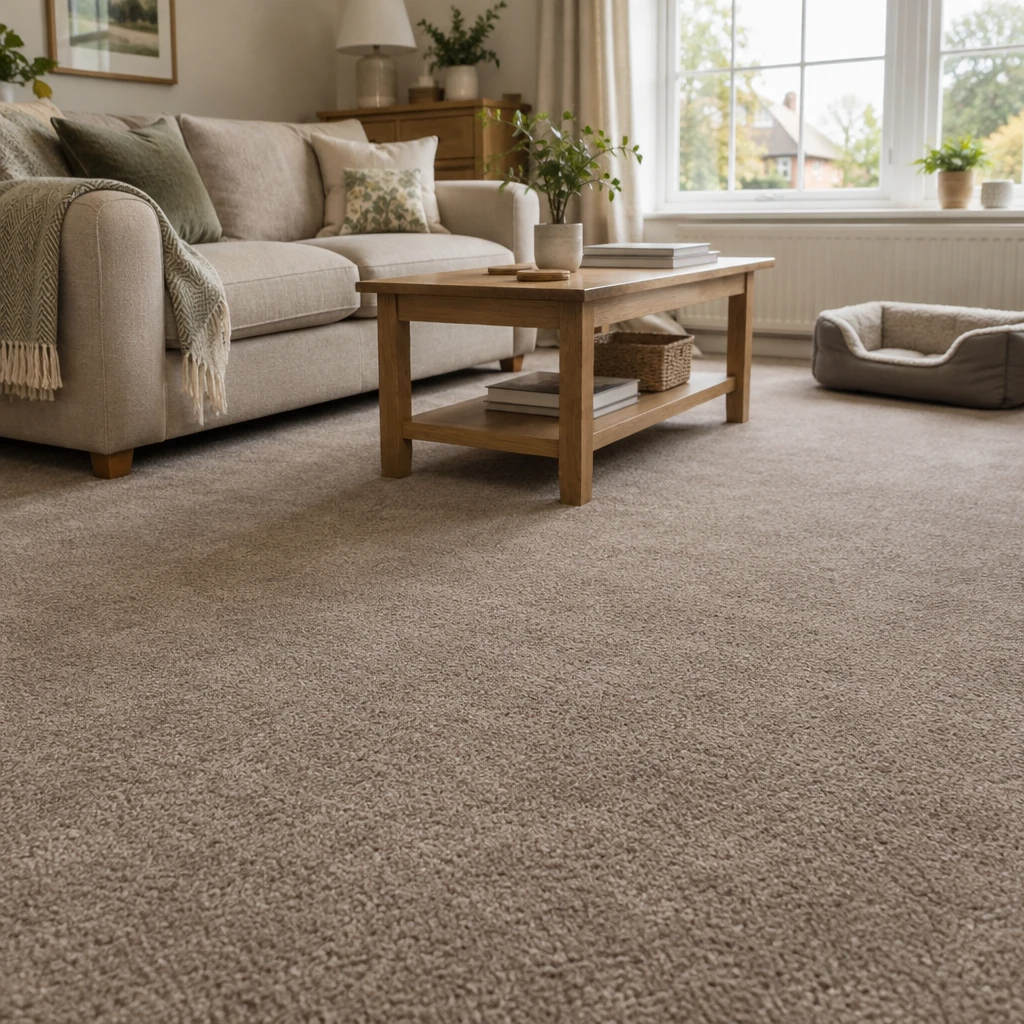
The best carpet for homes with pets is usually a dense, short cut-pile carpet with suitable stain resistance and clear cleaning instructions. Polypropylene is often a practical starting point for households concerned about muddy paws or occasional spills. Nylon can suit busy rooms where resilience matters. The right choice still depends on your pet’s behaviour, the room and the individual carpet specification.
No carpet is completely pet-proof. Claws can damage some constructions while repeated urine accidents can affect the backing, underlay or subfloor. Choosing well means looking beyond a pet-friendly label to understand how the carpet will perform and how you will maintain it.
What makes the best carpet for homes with pets?
A practical pet-friendly carpet combines a manageable pile, appropriate durability and a cleaning method that suits everyday life. Fibre type matters but construction and maintenance are equally important.
Start with the problems your household actually experiences. A dog that brings in wet soil creates different demands from a cat that scratches floor coverings. An older pet with frequent accidents may make carpet less suitable in certain rooms.
For muddy paws: prioritise straightforward cleaning and a colour that does not show every mark.
For claw damage: consider a short cut pile rather than exposed loops that claws could catch.
For heavy foot traffic: check the carpet’s stated suitability for the room and expected use.
For shedding: choose a pile that your recommended vacuum cleaner can clean effectively.
For repeated accidents: consider whether an appropriate hard floor would be more practical.
Ask to see the manufacturer’s care guidance before ordering. A carpet described as stain resistant may still have exclusions for pet urine, odour or damage caused by scratching.
Which carpet fibres work well with cats and dogs?
Polypropylene, nylon, polyester and wool can all have a place in pet-owning homes. None is automatically the best choice for every room or animal.
Polypropylene
Polypropylene is a synthetic fibre that absorbs little moisture into the fibre itself. Many polypropylene carpets offer useful resistance to common household stains. However, liquid can still pass between fibres into the carpet structure.
Some products permit diluted bleach cleaning but this must never be assumed. Follow the exact product instructions and keep pets away during treatment and drying. Polypropylene can also attract oily soiling and its resistance to flattening varies with the construction.
Nylon and polyester
Nylon, also called polyamide, is worth considering for resilience in busy living spaces. Stain performance depends on the individual product, including any treatment or manufacturing process. Check the specification rather than relying on the fibre name alone.
Polyester can offer softness and useful stain resistance. Its suitability for a busy pet household depends on pile density, construction and the level of traffic. A very soft sample is not necessarily the easiest option to maintain.
Wool and wool blends
Wool offers comfort and natural resilience but needs appropriate cleaning. It is not automatically unsuitable for pets. However, urine can cause difficult staining or damage and unsuitable cleaning chemicals can harm the fibre. Wool may be a less forgiving choice where accidents are frequent.
Is cut pile better than loop pile for pets?
Short cut pile is generally the safer starting point where claws are a concern. Cut-pile carpets have individual yarn ends at the surface rather than continuous exposed loops.
A dense twist-pile carpet can provide a practical balance of comfort and manageable cleaning. Shorter fibres also make it easier to reach trapped hair than a deep shaggy pile, although vacuum performance still depends on the carpet and machine.
Loop-pile carpet is not unsuitable for every pet household. The concern is that a claw may catch a loop and pull the yarn. Cats that deliberately scratch carpet present a particular risk. The size and tightness of the loops affect that risk but cannot remove it.
Avoid choosing on appearance alone. Ask the flooring supplier about the construction and explain whether your pet scratches, digs or has previously snagged a carpet. Keeping claws appropriately maintained can help but does not make any pile damage-proof.
Why do backing, underlay and fitting matter?
The carpet surface is only one part of the fitted floor. Backing, underlay and the condition of the subfloor affect comfort, support and what happens when liquid penetrates the pile.
A stain-resistant fibre does not create a waterproof floor. Urine or spilled water may reach the backing and underlay before the surface looks particularly wet. Odour can persist if only the visible pile is cleaned.
Choose underlay that is compatible with the carpet and suitable for the room. Thicker is not automatically better: excessive softness may be inappropriate for a particular carpet or installation. Do not assume that a barrier-backed product or underlay makes the whole installation watertight.
If you are replacing carpet after repeated pet accidents, tell the fitter beforehand. The old underlay may need replacing and the exposed subfloor may require assessment and suitable treatment. Covering an affected surface without addressing the source may leave an odour problem.
Which carpet colours hide pet hair and everyday marks?
Mid-tone carpets with a subtle fleck or heathered appearance often disguise everyday debris better than very pale or very dark plain colours. The most practical shade also depends on your pet’s coat.
White hair can stand out strongly on charcoal carpet while dark hair may be obvious on cream. A mixed-tone beige, taupe or grey can soften the contrast but will not eliminate visible shedding.
Take samples home and view them in daylight and artificial light. If possible, place a little naturally shed pet hair on each sample to compare visibility. Remember that camouflage is only an appearance benefit: a carpet that hides dirt still needs regular cleaning.
When is LVT a better choice than carpet?
LVT flooring may be more practical in pet-heavy areas where wiping up mud or occasional accidents matters more than a soft surface. Carpet often remains appealing in living rooms and bedrooms where comfort is the priority.
A mixed approach can work well: suitable LVT near an external door or feeding area with fitted carpet in quieter rooms. This reduces the amount of wet dirt carried directly onto carpet.
LVT still needs careful selection. Check the product’s wear specification, slip characteristics and cleaning instructions. Claws and trapped grit can scratch some surfaces. Water resistance also varies by product and installation system: do not assume every LVT floor protects the subfloor from standing liquid.
Subfloor condition, moisture and the chosen fitting method affect whether LVT is appropriate. A flooring assessment can establish the preparation required before you compare the overall installation costs.
How should you clean carpet when you have pets?
Regular vacuuming and prompt treatment of accidents are more useful than relying on stain resistance alone. Use the vacuum settings and cleaning methods recommended for the particular carpet.
Remove loose dirt: vacuum frequently enough to prevent hair and grit building up, especially along regular pet routes.
Deal with moisture promptly: blot with a clean absorbent cloth rather than rubbing the affected area.
Use approved products: check compatibility with the fibre and backing before applying a pet-stain or enzyme cleaner.
Avoid over-wetting: excessive liquid can carry contamination deeper into the floor covering.
Keep pets away: allow treated areas to dry fully and follow the cleaning product’s safety instructions.
Do not mix cleaning chemicals or assume a household disinfectant is suitable for carpet. Persistent smells, recurring marks or a large urine accident may require a professional carpet cleaner. Where contamination has reached the underlay or subfloor, surface cleaning alone may not resolve it.
A washable mat near the entrance and regular pet grooming can reduce the amount of dirt and loose hair reaching the fitted carpet.
What should you check before ordering pet-friendly carpet?
Choose the complete carpet specification rather than a single feature such as softness or stain resistance. Bring your room requirements and your pet’s habits into the discussion before committing.
Confirm that the carpet is suitable for the room’s expected domestic use.
Compare short cut-pile samples for feel, density and ease of cleaning.
Read cleaning guidance and any exclusions relating to pets.
Ask which underlay and fitting method the manufacturer recommends.
Explain any existing urine contamination or damaged flooring.
Request a quote covering preparation, underlay, fitting and disposal where required.
For most households, a practical shortlist starts with dense short cut-pile carpets in a forgiving mid-tone. From there, balance fibre choice against accident risk, traffic and your cleaning routine.
All Type Flooring provides fitted carpet and LVT flooring for homes in Kent. Discussing your pets and the way each room is used helps narrow the options before selecting your new floor.
Frequently Asked Questions
Can carpet make pet allergies worse?
Carpet can retain pet dander and other allergens. Regular vacuuming with a suitable filtered vacuum cleaner may help manage accumulation but changing flooring does not remove the source of a pet allergy. If someone has asthma or significant allergy symptoms, seek medical advice when deciding on flooring and cleaning routines.
Should pets stay out of the house during carpet fitting?
Pets should be kept securely away from the work area because fitting involves sharp tools, exposed gripper and open access routes. A separate closed room may be sufficient but arrangements depend on the property and work involved. Ask the fitter when pets can safely return, particularly if adhesives or subfloor treatments are used.
Is pet damage normally covered by a carpet warranty?
Do not assume pet damage is covered. Manufacturing, wear and stain warranties can have different terms and may exclude scratching, urine or odour. Read the wording for the exact carpet before purchase and check any separate accidental-damage policy with the insurer.
Is it worth keeping a spare piece of the new carpet?
Keeping a usable offcut can be helpful if a local repair is needed later. Store it clean and dry. A carpet fitter can assess whether a patch repair is practical but differences in wear, pile direction or fading may make the repair visible.
Contact All Type Flooring to discuss pet-friendly carpet options and fitting for your Kent home.