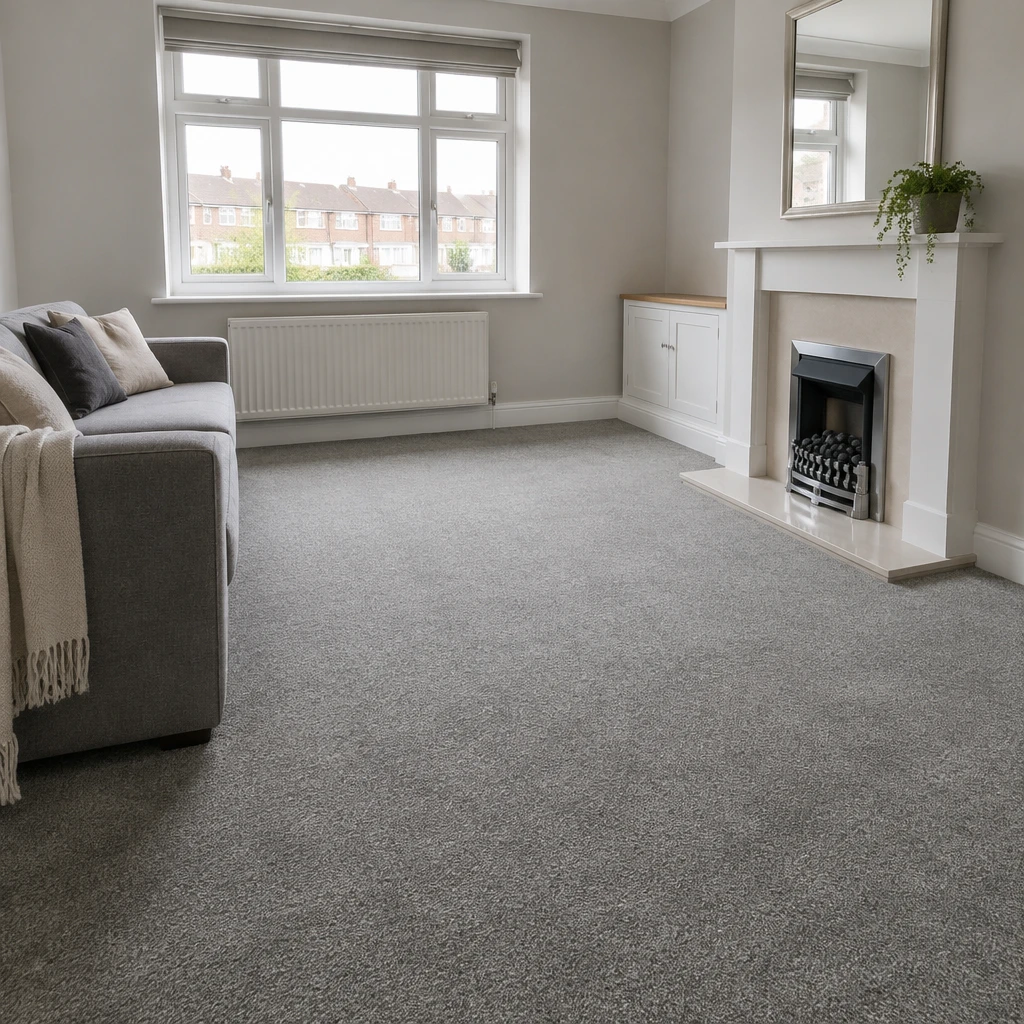
The best carpet for rental properties is usually a dense low-pile twist carpet with a suitable wear rating, practical stain resistance and a mid-tone colour that disguises everyday marks. It should suit the expected level of foot traffic rather than simply being the cheapest carpet available.
There is no single product that is right for every rental home. A one-bedroom flat occupied by one tenant has different requirements from a busy family house or a house in multiple occupation. Landlords should compare fibre type, construction, room use, maintenance needs, underlay and installation before making a decision.
What Is the Best Carpet for Rental Properties?
For many standard rental homes a short or medium-pile twist carpet made from polypropylene or a durable blended fibre offers a sensible balance of appearance, maintenance and cost. Nylon or polyamide can be worth considering where resilience under heavier traffic is the priority. Wool and wool blends offer comfort and a natural appearance but may require a larger budget and more considered maintenance.
The product specification matters more than fibre alone. Look for a carpet recommended by its manufacturer for the intended domestic or commercial use. A dense surface generally copes better with regular foot traffic than a loose deep pile. A suitable underlay and careful fitting also affect how the finished floor feels and performs.
A practical rental carpet will usually have these characteristics:
A short or medium pile that is straightforward to vacuum
A twist or similarly resilient construction
A wear classification suitable for the room and occupancy
A mid-tone colour or subtle fleck that helps conceal minor marks
Care instructions that are realistic for tenants and cleaners
Compatibility with the chosen underlay and subfloor
Choose Carpet by Durability Rather Than Price Alone
The lowest purchase price does not automatically deliver the lowest overall flooring cost. A very light-duty carpet can flatten or show wear quickly when installed in a busy entrance, living room or shared property. Equally a premium specification may be unnecessary in a lightly used bedroom.
Check the manufacturer’s stated suitability rather than judging quality only by thickness. A deep carpet can feel luxurious while still being less practical for frequent tenant changes. Density, fibre resilience, backing and construction all contribute to performance.
Match the rating to expected use
Carpets may be described as suitable for light domestic, general domestic, heavy domestic or forms of commercial use. Wording and classification systems can vary between manufacturers. Ask the flooring supplier to explain whether a product is appropriate for the specific room and expected traffic.
Landlords managing HMOs, serviced accommodation or communal areas may need a different specification from an ordinary single-household tenancy. Requirements can also depend on building design, fire risk assessment, lease conditions and insurer requirements. These points should be checked for the individual property.
Consider cleaning between tenancies
Rental carpet should tolerate appropriate routine vacuuming and periodic professional cleaning in line with the manufacturer’s instructions. Stain-resistant fibres can make maintenance easier but stain resistance does not mean that every spill will disappear or that any cleaning chemical can be used.
Keep the product care information and pass relevant instructions to tenants or managing agents. Incorrect chemicals, excessive moisture or aggressive scrubbing can damage some carpets and may affect the appearance of the pile.
Comparing Carpet Fibres for Landlords
Polypropylene, nylon or polyamide, polyester and wool blends are common options. Each fibre has advantages and limitations so the best choice depends on the property, budget and maintenance plan.
Polypropylene
Polypropylene carpets are widely chosen for rental homes because they can provide practical stain resistance at an accessible price. Many are available in twist constructions and neutral colours. Product quality still varies so landlords should check the wear rating, density and cleaning guidance rather than assuming that every polypropylene carpet performs in the same way.
Some marks and oily residues can be difficult to remove from any synthetic carpet. Heat sensitivity and the manufacturer’s cleaning restrictions should also be considered.
Nylon or polyamide
Nylon is valued for resilience and can be a strong option in busy living spaces or managed properties. It often recovers well from normal compression when correctly maintained. The initial cost may be higher than some entry-level alternatives and stain performance depends on the particular product and treatment.
Polyester
Polyester can provide softness, colour clarity and useful stain resistance in suitable settings. It may work well in bedrooms or lower-traffic rooms. Landlords should compare pile density and use classification carefully because performance differs across ranges.
Wool and wool blends
Wool offers natural warmth, comfort and a high-quality appearance. A wool blend may combine some of those qualities with synthetic fibre resilience. These carpets can suit higher-end rentals where presentation and feel are important. They normally need appropriate cleaning methods and may not be the most economical choice for every buy-to-let refurbishment.
Select Carpet for Each Room
Room use should guide the specification. Installing one carpet throughout can simplify ordering and create a consistent appearance but it should be durable enough for the busiest carpeted area.
Living rooms and hallways
Living rooms and internal hallways tend to experience concentrated movement. Choose a dense resilient carpet with a suitable heavy domestic rating where needed. Shorter piles are generally easier to maintain and are less likely to show traffic lanes than loose plush finishes.
Bedrooms
Bedrooms usually receive less foot traffic so comfort can have greater priority. A general domestic carpet may be sufficient depending on occupancy. Using the same practical colour palette across bedrooms can also make future repairs or partial refurbishment easier although exact batch matches cannot be assumed.
Entrances, kitchens and bathrooms
Carpet is not normally the most practical choice immediately inside a frequently wet or muddy entrance. A suitable hard floor near the external door can help manage moisture and grit before occupants reach carpeted rooms.
Kitchens and bathrooms need flooring that can cope with spills, humidity and regular cleaning. Carpet is generally less suitable in these rooms. Landlords may instead consider an appropriate sheet floor or luxury vinyl tile system after checking the subfloor and product requirements.
Why Underlay and Fitting Matter
A suitable underlay supports comfort, insulation and the overall performance of fitted carpet. The correct underlay depends on the carpet, subfloor, room use and any underfloor heating system. Reusing an old underlay may be a false economy if it is compressed, damaged, contaminated or incompatible with the new carpet.
The subfloor should be inspected before fitting. Uneven areas, loose boards, damp concerns or residues from previous flooring may need attention. Carpet should not be used to conceal an unresolved subfloor or moisture problem.
Professional measuring can reduce avoidable joins and help the landlord understand how room shapes affect material quantities. Skilled fitting also helps produce secure edges, properly positioned joins and a neat finish around doorways. Door clearances and transitions to other floor coverings should be assessed before work begins.
Choose Colours That Work Between Tenancies
Mid-tone greys, taupes, beiges and subtle mixed shades are practical in many rental interiors. They coordinate with a broad range of furniture and are less likely than very pale colours to display every small mark. A light fleck or heathered appearance can also disguise fibres and everyday debris between vacuuming.
Very dark carpet can show lint, dust and pale pet hair. Very light carpet can make spills and soil more noticeable. Bold colours may appeal in a particular interior but can restrict future decorating choices. The best colour is therefore usually neutral without being extremely pale or dark.
Request samples and view them in the property under natural and artificial light. Screen colours are not a reliable guide to the finished product. If several rooms are being fitted at different times ask about batch variation and availability before assuming an exact future match.
Check Safety, Access and Property-Specific Requirements
Carpet selection must account for the property’s actual use and any relevant safety requirements. Standards for an ordinary rented home may differ from requirements applying to communal spaces, HMOs, supported housing or commercial accommodation.
Ask for available product information relating to reaction to fire and intended use. Where a fire risk assessment applies the carpet choice should align with that assessment. Landlords should also check local authority conditions, building requirements, lease terms and insurer instructions where relevant. A flooring supplier can provide product details but property-specific legal or fire safety questions may require advice from the appropriate competent professional.
Accessibility should also be considered. Deep soft piles may make movement harder for some wheelchair users or people with reduced mobility. Secure transitions and suitable thresholds reduce trip risks between carpet and adjacent flooring. Individual needs should be discussed before the specification is finalised.
A Practical Landlord Carpet Checklist
The best carpet for rental properties is a product selected for the building and expected occupants rather than a universal landlord range. Before ordering confirm the following points:
The carpet is rated for the expected room use and foot traffic
The fibre and construction suit the planned cleaning regime
The colour is practical for tenant changes and future decoration
The underlay is compatible and in suitable condition
The subfloor has been inspected for defects or moisture concerns
Doors, thresholds and adjoining floors have been considered
Relevant fire safety, lease and insurance requirements have been checked
Care information will be retained for tenants and managing agents
For many landlords the strongest all-round choice will be a dense low-pile twist carpet in a forgiving mid-tone shade. However the final specification should reflect occupancy, room use and site conditions. An on-site assessment and physical samples can make it easier to balance cost, appearance and practical maintenance.
Frequently Asked Questions
Are carpet tiles suitable for a rental property?
Carpet tiles can be practical in home offices, HMOs or managed accommodation because damaged sections may be replaceable. They need a suitable prepared subfloor and the product must be rated for the intended space. Batch variation and discontinued ranges can make later matching difficult so spare tiles should be stored carefully.
Should landlords choose the same carpet throughout a property?
Using one carpet in bedrooms, halls and living areas can create a consistent finish and simplify purchasing. The chosen carpet must be suitable for the busiest location. Wet rooms and heavily exposed entrances may need a different flooring type.
What carpet colour is best for rental homes with pets?
A mid-tone heathered shade close to the likely pet hair colour can make loose hair less visible between cleaning. Colour alone is not enough. Check cleaning guidance, consider snagging risks from loop piles and review any tenancy or pet policy separately.
When should rental carpet be replaced rather than cleaned?
Replacement may be appropriate when carpet is badly worn, permanently stained, contaminated, damaged at edges or no longer secure. The decision depends on condition, hygiene, repair feasibility and tenancy obligations. A site inspection can help distinguish cleanable marks from damage requiring replacement.
Arrange a rental property flooring assessment with All Type Flooring in Kent.