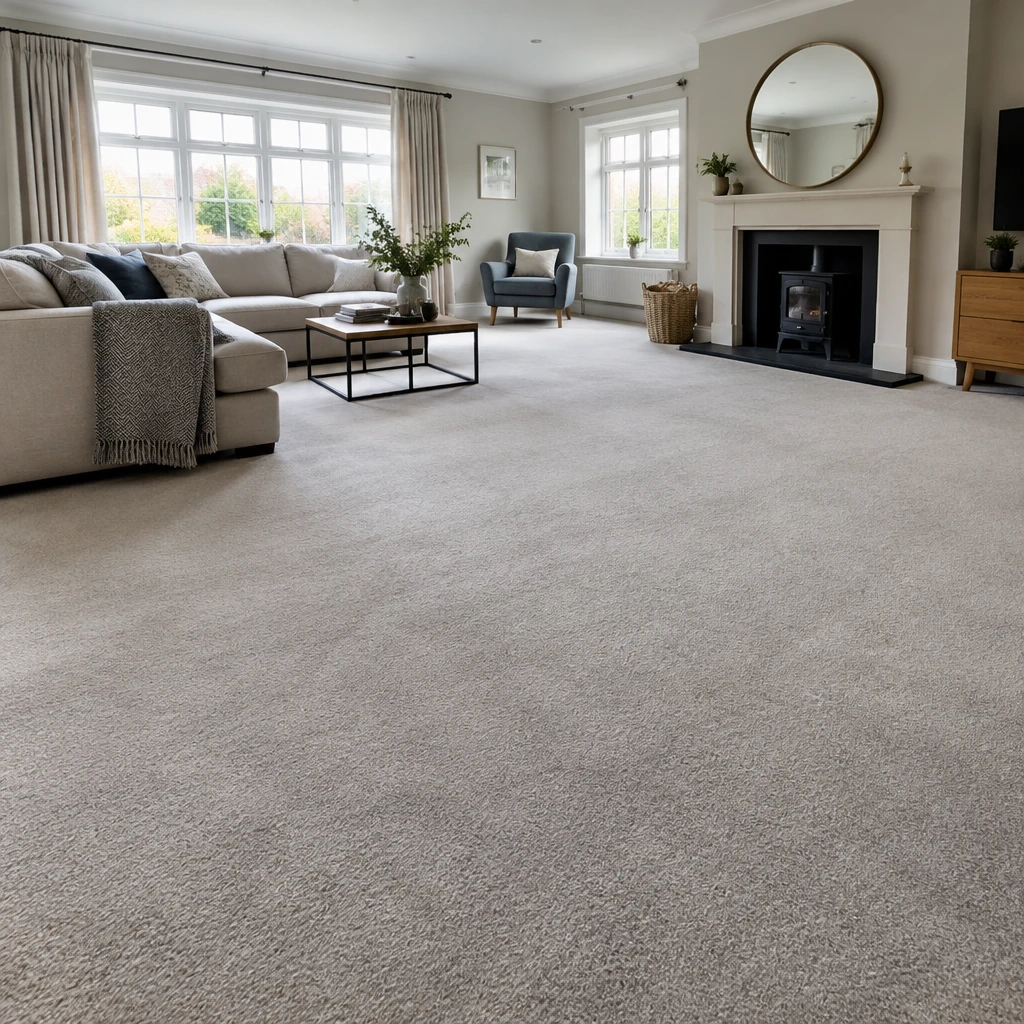
Carpet joins may be slightly visible after fitting but a well-planned and properly formed join should not normally dominate the finished floor. Visibility depends on the carpet construction, pile direction, room lighting, seam position and quality of installation. Some carpets disguise joins extremely well while others can show a faint line from certain angles even when the fitting is sound.
A join is needed when a room is wider than the available carpet roll, has an irregular layout or requires separate pieces to cover connected areas. Professional fitting can minimise the appearance of carpet joins but no responsible fitter can promise that every seam will be completely invisible under every lighting condition.
Why are carpet joins sometimes visible?
A carpet join or seam is the line where two pieces of carpet meet. The cut edges are aligned and secured using a suitable joining method so the pieces behave as one fitted floor. The join can become noticeable because the pile sits differently near the cut edges or because light creates a subtle contrast across the seam.
Visibility does not automatically mean that a join has been fitted incorrectly. A sound seam can appear as a faint line when viewed towards a window yet be difficult to see from another direction. The relevant question is whether the seam is secure, correctly aligned and acceptably neat for the carpet and room conditions.
Newly fitted carpet may also show temporary pressure marks near the seam. Handling, rolling and fitting can compress the pile. These effects often reduce as the carpet is vacuumed and used although the time required depends on the material and construction.
What affects the appearance of carpet joins?
The finished appearance is influenced by several connected factors. Carpet choice and seam planning should therefore be considered before material is cut.
Carpet construction and pile
Dense twist piles and textured carpets often disguise seams better because the fibres break up the line. A smooth plain carpet can make small changes in pile direction or surface texture easier to notice. Loop pile carpets require careful cutting and alignment because an uneven row can draw attention to the join.
Patterned carpet introduces another consideration. The design must be matched across the joined pieces. Pattern matching can require additional material and careful positioning. Minor manufacturing tolerances may also affect how precisely a design lines up across a wide area.
Colour and surface texture
Mid-tone or varied colours usually conceal minor surface differences more readily than very light, very dark or completely plain shades. This does not mean that a particular colour is unsuitable. It means that the likely seam position should form part of the selection decision where a discreet finish is especially important.
Natural and artificial light
Low light travelling across the carpet can cast a small shadow along a join. Large windows, glazed doors and directional spotlights can therefore make a seam more apparent at particular times of day. A seam viewed across the light may look different from the same seam viewed with the light behind it.
Room orientation matters as much as brightness. A fitter can assess likely sightlines and light direction but changing daylight means seam visibility can never be judged from one viewing position alone.
How professional fitters plan carpet joins
Good seam planning aims to place the minimum practical number of joins in less prominent positions without compromising material use or fitting quality. The fitter considers room dimensions, carpet roll width, doorways, alcoves, traffic routes, pile direction and the location of major light sources.
A join may be positioned away from the main entrance or a central viewing line where the room layout allows. However placing every seam under furniture is not always possible or advisable. Heavy furniture can make later inspection difficult and a seam still needs to follow a technically suitable line.
All joined sections should normally run with a consistent pile direction. Reversing one piece can create a strong colour difference because the fibres reflect light differently. The pieces may be cut from the same carpet yet appear to be different shades when the pile directions do not match.
Accurate measurement is essential. Choosing a layout purely to reduce material use can result in a more prominent join. Conversely ordering excessive carpet does not automatically create a better result. A professional estimate should balance seam placement, pattern matching, roll dimensions and reasonable material efficiency.
How is a carpet seam formed?
The exact technique depends on the carpet backing, installation system and site conditions. For many domestic installations the edges are accurately cut before seam tape and controlled heat are used to bond the backing beneath the join. Other carpet systems may require a different manufacturer-approved method.
The fitter must avoid gaps, overlap and trapped pile. Carpet fibres caught in the seam can form a visible ridge while poor edge alignment may leave the backing exposed. The seam also needs suitable support beneath it and the carpet must be fitted with appropriate tension across the room.
Seaming is only one part of the installation. Subfloor condition, underlay choice, gripper positioning and transitions at doorways can all affect the finished result. Uneven subfloors may create shadows or movement that make a seam more noticeable. Site-specific preparation should be confirmed after inspection rather than assumed from photographs alone.
What should a properly fitted carpet join look like?
A properly fitted carpet join should be closed, secure and level with no obvious gap or raised hard ridge. The pile should run in the same direction on both sides unless the carpet design specifically requires another arrangement. Patterns and rows should be aligned as closely as the product allows.
A faint surface line is not necessarily a fault. The join may be detectable at close range or under strong side lighting while remaining unobtrusive during normal use. Expectations should account for carpet type, room size and the unavoidable need for a seam.
Look at the installation from normal standing height and from the positions in which the room is commonly entered or used. Inspecting with a torch held close to the floor can exaggerate surface features that are not apparent under normal room lighting. However a clear opening, loose edge or substantial ridge should be raised with the fitter.
Will a visible seam settle after fitting?
Some seam visibility can reduce after fitting as compressed fibres recover and routine vacuuming lifts the pile. Loose fibres around the cut line may also blend into the surrounding surface. The result depends on the carpet fibre, pile density and reason the seam is visible.
Settling will not correct every issue. A gap between the pieces, mismatched pile direction, poorly aligned pattern or failed bond is unlikely to disappear through normal use. Do not pull at the seam or apply household adhesive because this can damage the carpet and complicate a professional repair.
Follow the carpet care guidance and vacuum using a setting suitable for the pile. If the seam remains prominent or changes after use, take clear photographs in normal lighting and contact the fitter. An on-site inspection may be needed to distinguish temporary pile disturbance from an installation problem.
When should a carpet join be checked?
Ask the installer to assess the seam if it appears to be opening, lifting or moving underfoot. Exposed backing, frayed edges and a hard raised line can also justify closer inspection. Prompt advice is particularly important in a busy route where continued traffic could worsen an insecure edge.
The two carpet pieces are separating or exposing the backing.
The seam has a pronounced ridge that can be felt underfoot.
Pile direction appears different on each side of the join.
A patterned design is noticeably out of alignment.
The carpet moves or makes a sound around the joined area.
Fibres continue to pull away from the seam during normal cleaning.
The appropriate response depends on the cause. A fitter may be able to adjust or reform a local seam but replacement could be considered where material has been cut incorrectly or where damage prevents a reliable repair. The carpet type, remaining spare material and installation method all affect the available options.
How can you reduce the risk of prominent carpet joins?
Start by giving the flooring company accurate room dimensions and access to inspect the area where possible. Discuss large windows, strong directional lighting, intended furniture positions and the viewpoints that matter most. If the room exceeds the carpet roll width, ask where the proposed seam will run before approving the layout.
Choose carpet with an understanding of how its texture and design may affect seam visibility. A sample helps with colour and feel but may not demonstrate how a joined installation will appear across a large room. Ask whether pattern matching will require extra material and whether the chosen carpet has any specific fitting requirements.
Use an experienced carpet fitting service rather than treating the seam as a minor detail. Careful measuring, sensible layout planning and correct installation methods give the best chance of a discreet result. For homes and businesses in Kent, All Type Flooring can assess the room and explain the likely seam positions before carpet is ordered and fitted.
Frequently Asked Questions
Can a carpet join be placed in a doorway?
A doorway can sometimes provide a practical seam or transition position but suitability depends on the carpet layout, traffic direction and floor covering in the adjoining room. The fitter should confirm the position after measuring the space.
Can carpet seams be repaired without replacing the whole carpet?
Some loose or opening seams can be repaired locally if the carpet edges and backing remain in usable condition. Damage, incorrect cutting or insufficient material may limit the options so an on-site assessment is usually required.
Does vacuuming make a new carpet join more visible?
Correct vacuuming can help lift compressed pile and blend the surface around a new seam. An unsuitable beater setting or aggressive cleaning may disturb some carpet types so follow the care advice for the specific product.
Should spare carpet be kept after installation?
Keeping a clean dry offcut can be useful for future local repairs or colour reference. Spare material does not guarantee that every repair will be possible but it may provide more options if accidental damage occurs.
Arrange a carpet measure and fitting consultation with All Type Flooring.