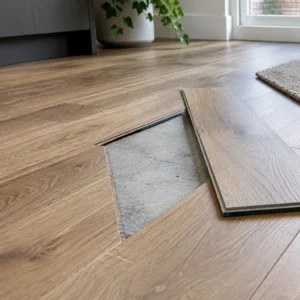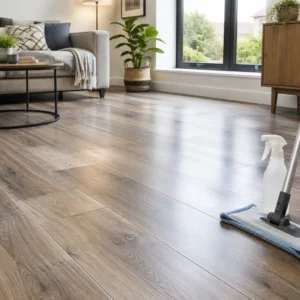
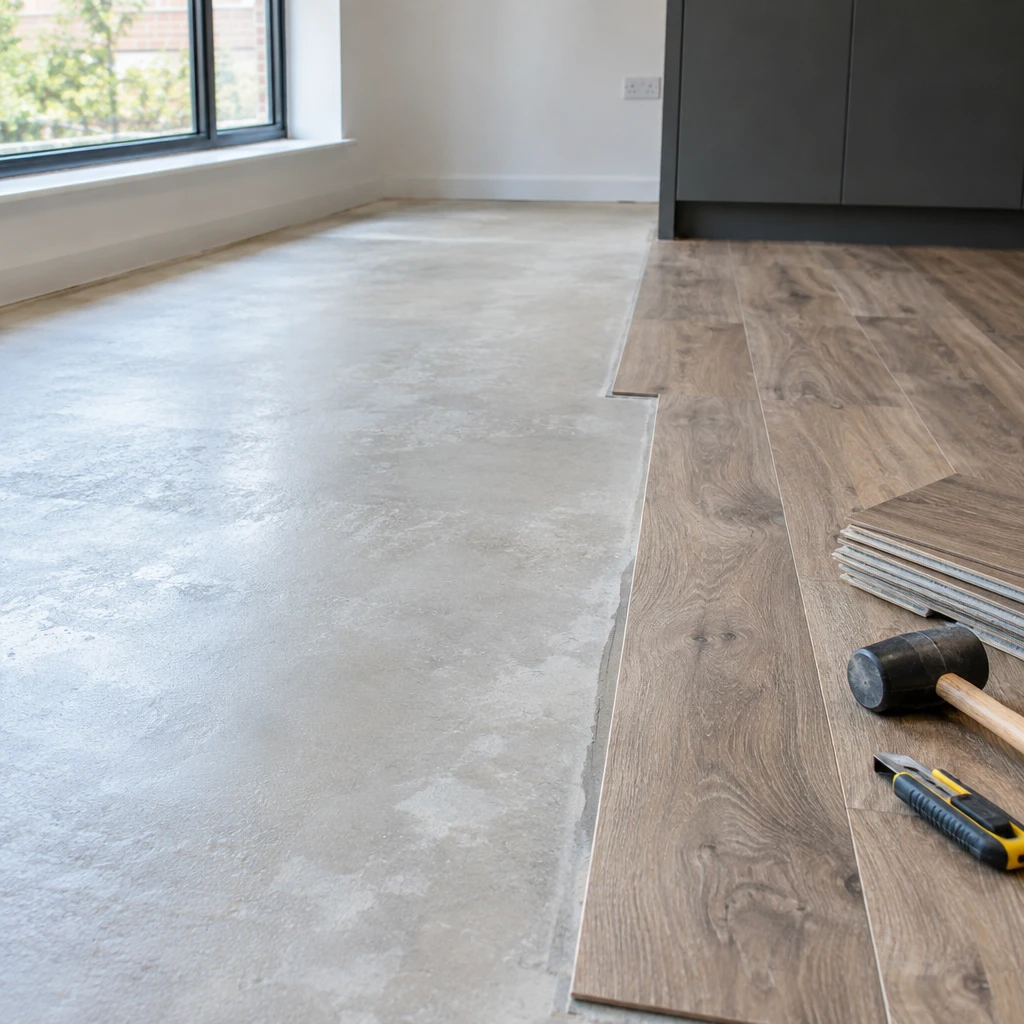
Subfloor preparation before laying LVT is essential because luxury vinyl tiles and planks need a stable, clean, dry and suitably smooth base. If the surface underneath is uneven, damp or contaminated the finished floor may show imperfections or develop problems such as movement, poor adhesion and separating joints.
Preparation is not simply an optional finishing touch. It is a key part of the installation process for both domestic and commercial LVT flooring. The work required depends on the existing floor, the chosen LVT product and the installation method. A professional assessment helps establish what must be done before any planks or tiles are fitted.
What does LVT subfloor preparation involve?
LVT subfloor preparation is the process of inspecting, cleaning and correcting the base onto which the new floor will be installed. The objective is to create a surface that meets the requirements of the selected flooring and adhesive system.
Depending on the site this may involve:
Removing existing floor coverings and loose adhesive residue
Checking the subfloor for movement, cracks and damaged areas
Testing concrete or screed for excess moisture
Securing loose timber boards or suitable flooring panels
Applying a primer where required by the preparation system
Using a smoothing compound to correct surface irregularities
Cleaning away dust, grease and other contaminants
Preparation requirements vary between products. The LVT manufacturer’s installation instructions and the condition of the property should guide the specification rather than a single method being used for every floor.
Why subfloor preparation before laying LVT matters
LVT is relatively thin and can follow the shape of the surface beneath it. Ridges, joints, cracks and debris may therefore become visible through the finished covering. This effect is often called subfloor telegraphing.
Correct preparation also supports the way the flooring is intended to perform. Glue-down LVT relies on a compatible adhesive making effective contact with the prepared surface. Click LVT does not normally require full adhesive coverage but it still needs a stable and sufficiently level base so that the locking joints are not placed under unnecessary strain.
A well-prepared subfloor can help to:
Create a smoother and more consistent appearance
Support secure adhesion for bonded LVT
Reduce unwanted movement beneath click systems
Prevent old floor joints or defects showing through
Provide a clean base for primers, membranes and compounds
Identify moisture or structural concerns before they are covered
Preparation cannot correct an unsuitable product choice or a serious structural defect. Significant movement, water ingress or damaged supporting structures may require separate remedial work before flooring installation can begin.
How is an existing subfloor assessed?
A subfloor assessment considers moisture, surface regularity, stability and contamination. The flooring contractor should also identify the subfloor material and check how it interacts with the proposed LVT system.
Surface condition and level
The floor is checked for high spots, depressions, cracks, raised fixings and abrupt changes between adjoining areas. A floor does not always have to be perfectly level in relation to the building but it normally needs to be sufficiently flat and smooth for the chosen installation. The acceptable tolerance depends on the product and system specification.
Strength and movement
Loose boards, flexible panels and crumbling screed can undermine the finished floor. Timber subfloors may need loose areas securing or a suitable overlay installing. Weak concrete or screed may need specialist assessment because applying a smoothing product over an unstable base will not resolve the underlying weakness.
Cleanliness and compatibility
Dust, oil, paint and old adhesive can interfere with new preparation materials or flooring adhesive. Existing residues must be identified before removal because some older floor materials and adhesives may contain hazardous substances. Suspected asbestos-containing materials should not be sanded, scraped or disturbed. Appropriate testing and specialist advice may be required.
Preparing concrete and screeded floors for LVT
Concrete and screed must be sound, suitably dry and properly prepared before LVT is installed. Although a floor can appear dry at the surface it may still contain moisture within the slab or screed.
A suitable moisture test should be completed using a method appropriate to the subfloor and flooring system. If the reading is too high installation may need to be delayed or an approved surface damp-proof membrane may be considered. The correct response depends on the source of moisture, the construction of the floor and the requirements of the adhesive and LVT manufacturers.
Cracks should also be assessed rather than simply hidden. A stable non-structural crack may be repairable as part of the preparation process. Active movement or continuing water ingress requires further investigation. A smoothing compound can then be selected where needed to produce a consistent surface. Priming and application depths must follow the preparation product specification.
Preparing timber subfloors for LVT
A timber subfloor must be rigid, secure and capable of supporting the proposed LVT system without excessive movement. Floorboards or panels that flex or move can lead to visible lines, failed adhesive contact or stress at click joints.
Preparation may include securing loose boards, replacing damaged sections and installing a suitable flooring-grade overlay. Fixings should be positioned correctly and finished flush with the surface. Joints and fixing points may also need treatment as part of the specified preparation system.
Ventilation and moisture conditions beneath suspended timber floors should not be ignored. Dampness, decay or persistent movement requires investigation before an overlay is installed. Covering a defect does not remove its cause.
Does preparation differ for glue-down and click LVT?
Both glue-down and click LVT require a suitable subfloor but their preparation priorities differ. Glue-down LVT needs a particularly smooth and compatible surface because the tiles or planks are bonded directly to it. Small imperfections can affect adhesive contact or become visible through the flooring.
Click LVT is installed as a floating floor. It can sometimes accommodate minor surface texture more readily but it should not be treated as a way to hide substantial unevenness. Low spots and high points may allow the floor to rock or place pressure on the locking mechanism.
Some click products require an underlay while others have an integrated backing or specify that a separate underlay must not be used. Adding an unsuitable layer can create excessive movement. Product instructions should therefore be checked before preparation and installation are planned.
What happens if the subfloor is not prepared correctly?
Poor preparation can affect appearance, adhesion and stability. The exact problem depends on the subfloor defect and type of LVT but common risks include:
Ridges, cracks or board joints becoming visible through the LVT
Glue-down tiles lifting or shifting where adhesion is poor
Click joints separating or becoming stressed over uneven areas
Hollow or moving sections underfoot
Moisture affecting adhesives and preparation compounds
An inconsistent finish around thresholds and adjoining floors
Installing LVT over an unsuitable base can make later repairs more disruptive. Sections of flooring may need to be lifted so that the original subfloor problem can be reached. Assessing the floor first is usually more practical than attempting to correct hidden defects after installation.
How long does subfloor preparation take?
The time needed depends on the floor area, substrate condition and materials used. A clean and stable surface may require limited work. A damp or uneven floor with old coverings and adhesive residues can require several stages.
Drying and curing periods must be allowed for when primers, damp-proof membranes, repair products or smoothing compounds are used. These periods vary with the specific product, application depth and site conditions. The LVT should not be installed simply because the surface looks dry. The preparation system must be ready to receive the flooring according to its instructions.
Site access can also affect the programme. Furniture removal, floor-covering uplift and work around fitted units should be discussed before installation. Commercial premises may need preparation arranged in phases to reduce disruption while still allowing each area enough time to cure.
Planning professional LVT installation in Kent
A reliable LVT quotation should consider the condition of the subfloor as well as the cost of the visible flooring. This helps property owners understand why preparation may form a significant part of the project.
Before choosing an LVT floor discuss the existing substrate, expected use of the room and preferred installation method with the flooring contractor. Kitchens, hallways, offices and retail spaces can place different demands on a floor. Underfloor heating, moisture exposure and transitions into neighbouring rooms may also influence product selection and preparation.
All Type Flooring supplies and fits LVT for homes and businesses across Kent. A site assessment can identify likely preparation requirements and help match the flooring system to the room. Final recommendations should always be based on the inspected condition of the subfloor and the technical requirements of the selected products.
Frequently Asked Questions
Can LVT be laid directly over existing tiles?
Sometimes but only if the tiles are firmly bonded, clean and sufficiently even. Grout lines or textured tiles may need smoothing to prevent them showing through. Loose or cracked tiles require investigation and the LVT manufacturer’s instructions must permit the proposed installation.
Should kitchen units be fitted before or after LVT?
The correct sequence depends on whether the LVT is glue-down or floating and on the kitchen design. Floating floors should not usually be trapped beneath fixed units unless the manufacturer allows it. Discuss the layout with the flooring fitter and kitchen installer before work begins.
Can underfloor heating be used beneath LVT?
Many LVT products can be used with compatible underfloor heating systems subject to product-specific temperature limits and commissioning instructions. The subfloor must still be stable, dry and correctly prepared. Confirm compatibility across the heating system, adhesive and flooring specifications.
Does all old flooring need to be removed before LVT is fitted?
Not always. Some stable existing surfaces may be suitable after assessment and preparation. Soft coverings, loose materials and incompatible finishes normally need removal. Older tiles or adhesive should be checked for hazardous materials before they are disturbed.
Arrange an LVT flooring and subfloor assessment in Kent.