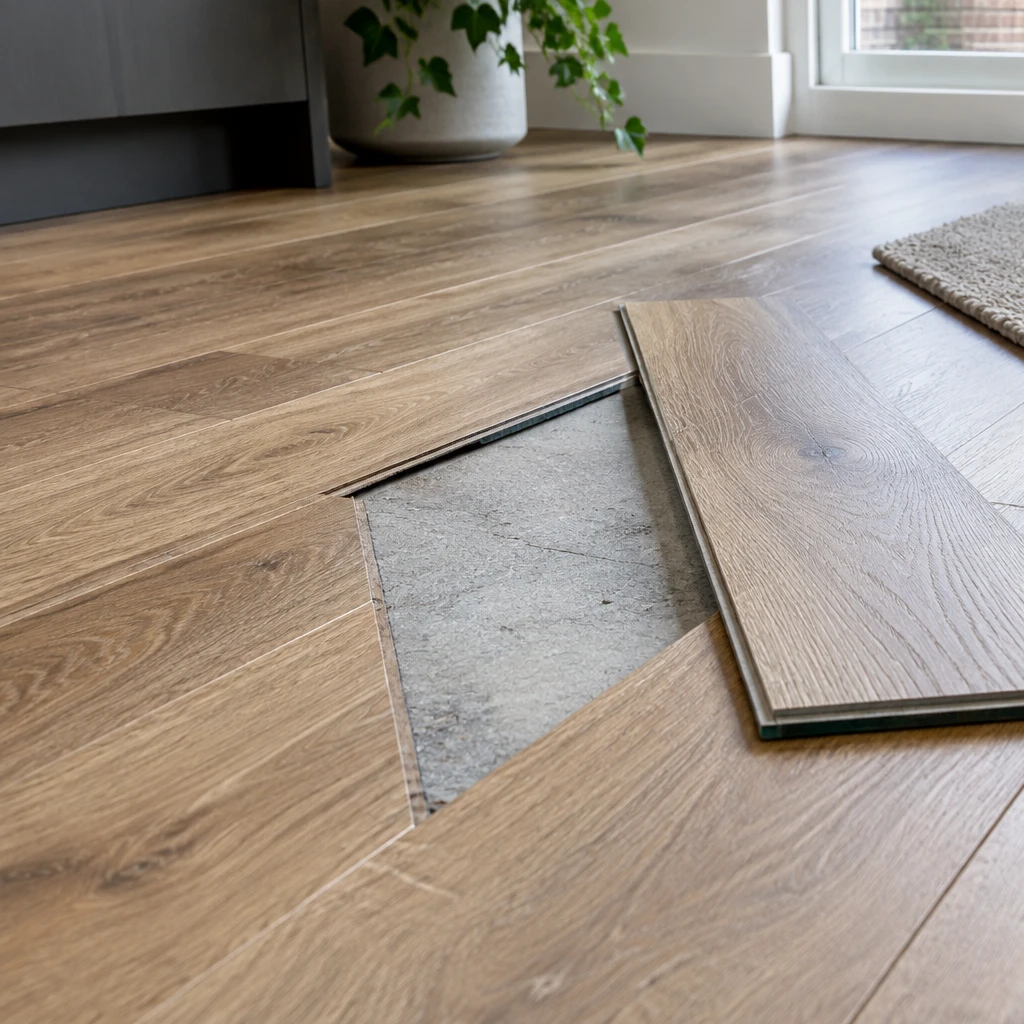
Yes. In many cases a flooring professional can replace damaged LVT planks without renewing the entire floor. The correct method depends on whether the flooring is glue-down or click LVT as well as the location of the damage and the condition of the subfloor.
Successful replacement also depends on finding a compatible plank. The new plank must match the existing product\’s dimensions and fitting system. Colour and pattern can vary between production batches so an exact visual match is not always possible even when the same design is available.
When is it possible to replace damaged LVT planks?
An individual replacement is usually practical when the damage is limited to one plank or a small localised area. Common examples include deep scratches, chips, burns, dents, stubborn stains and a broken click joint.
The surrounding floor must also be stable. If nearby planks are lifting or moving then replacing only the most visibly damaged plank may not address the underlying problem. A flooring assessment should identify whether the issue is isolated or part of a wider installation or subfloor fault.
Replacement is more likely to be suitable when:
The damaged area can be accessed without harming surrounding planks
A matching or acceptably similar replacement plank is available
The subfloor beneath the plank is dry and sound
The original adhesive or locking method can be dealt with correctly
The damage has not spread across a large section of flooring
If water has entered beneath the LVT or the floor has developed widespread movement then more planks may need to be lifted. The required work will depend on the source of the moisture and the construction beneath the floor.
What should be checked before replacing a plank?
The flooring type should be identified before any plank is removed. Luxury vinyl tile flooring is installed using several different systems and each system requires a different approach. Packaging left from the original installation can provide useful details such as the product range and batch reference.
A flooring professional will normally consider the following points.
Installation method: The floor may be fully bonded with adhesive or installed as a floating click system.
Product compatibility: Plank length and width are not the only factors. Thickness and edge profiles must also be compatible.
Pattern direction: Wood-effect grain and design variation should be positioned naturally within the existing layout.
Subfloor condition: Unevenness or contamination can prevent the replacement plank from sitting correctly.
Cause of damage: Moisture or movement must be investigated before the visible surface is repaired.
Underfloor heating: The heating system and product instructions can affect adhesive selection and working procedures.
Where the product cannot be identified a close visual match may be considered. However differences in shade and surface texture can remain noticeable. The customer should understand this before work begins.
How are damaged LVT planks replaced?
The replacement process depends mainly on whether the LVT is glue-down or click flooring. Manufacturer guidance should be followed where it is available because fitting systems and approved repair methods differ.
Replacing glue-down LVT
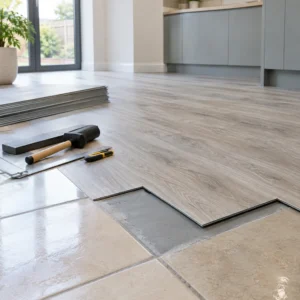
A glue-down plank is bonded directly to the prepared subfloor. The damaged piece can often be carefully warmed and lifted before the remaining adhesive is removed or prepared. The installer then checks the exposed area for moisture damage and surface defects.
Suitable adhesive is applied according to the product requirements. The replacement plank is aligned with the surrounding joints and fitted into the opening. Correct placement matters because a small gap or raised edge can collect dirt and remain visible.
Glue-down LVT is often well suited to localised repairs because each plank is individually bonded. However removal must be controlled to avoid marking neighbouring planks or damaging the subfloor.
Replacing click LVT
Click LVT is normally installed as a floating floor with planks joined by interlocking edges. The conventional repair method may involve removing skirting or trim before dismantling the floor from the nearest accessible edge until the damaged plank is reached.
Some click products can be replaced using a local cut-out method. This approach is product-specific and can affect the locking edges so it should not be assumed to be suitable for every floor. An incorrect cut can weaken the replacement area or damage more planks.
Room layout also affects the work required. Fixed kitchen units, door frames and floor transitions may limit access. A plank close to a wall is generally easier to reach than one in the centre of a large connected floor.
Should a scratched plank be repaired or replaced?
Light surface marks do not always require plank replacement. Cleaning the area with a product suitable for LVT may show that the mark is residue rather than damage. Some minor scratches can be made less noticeable using a compatible maintenance or repair product.
Replacement is usually the more appropriate option when a scratch has cut through the wear layer or when a gouge has exposed the backing. Burns and deep dents are also unlikely to be resolved through routine cleaning.
Repair products can alter the sheen of the floor and may become more visible under direct light. Test any product on a spare plank or inconspicuous area first and check the flooring manufacturer\’s care instructions. Abrasive cleaners and unsuitable solvents can cause further surface damage.
Why might a single-plank replacement not be enough?
A visibly damaged plank can sometimes be a symptom rather than the complete problem. Repeated lifting or separation may indicate movement in the subfloor or an unsuitable expansion gap. Persistent staining can point to moisture entering from an appliance leak or another source.
Wider investigation may be needed when:
Several joints are opening across the room
Planks feel soft or move underfoot
The floor is lifting in more than one location
There is a persistent damp smell or visible moisture
Damage follows the same line across multiple planks
The subfloor is cracked or uneven
The cause should be dealt with before replacement flooring is installed. Moisture testing or subfloor repairs may be necessary depending on the property and floor construction. If an old adhesive or substrate is of uncertain composition it should not be sanded or disturbed without suitable professional advice.
What are the risks of DIY LVT plank replacement?
A confident homeowner may be able to replace a straightforward glue-down plank when the correct spare product and adhesive are available. However the task can become difficult once the old plank has been lifted. Residual adhesive and minor subfloor damage can stop the new plank from lying flush.
Click LVT can be particularly vulnerable to damaged locking edges. Pulling planks apart at the wrong angle may crack joints that initially appear undamaged. Reassembly can also be complicated around doorways and adjoining rooms.
Other DIY risks include using excessive heat and choosing an incompatible adhesive or cutting into underfloor heating components. The location of hidden services should be considered before cutting or scraping the subfloor.
Professional fitting is sensible when the floor covers a commercial area or when several planks are affected. It is also advisable where moisture or subfloor movement is suspected. Any remaining product warranty or property insurance conditions should be checked because repair requirements depend on the relevant policy or manufacturer terms.
How can future LVT damage be reduced?
Good maintenance can reduce scratches and concentrated pressure but it cannot prevent every accident. Use entrance matting to capture grit and fit suitable protective pads beneath furniture. Furniture should be lifted rather than dragged across the floor.
Wheeled office chairs and mobile equipment may require protection suited to the floor and expected load. In commercial spaces the chosen solution should reflect traffic levels and operational requirements.
Spills should be cleaned promptly using an LVT-compatible method. Avoid saturating joints because liquid can reach the subfloor even when the vinyl surface itself resists moisture. Follow the product\’s cleaning guidance and avoid steam cleaning unless the flooring manufacturer specifically permits it.
Keeping a few unused planks from the original installation can make a future repair easier. Store spare planks flat in a dry location with any packaging and product references.
Arrange an assessment for damaged LVT flooring
Individual LVT plank replacement can be a practical and economical repair when the damage is localised and a suitable replacement is available. The first step is to identify the installation system and inspect the surrounding floor for signs of a wider issue.
All Type Flooring can assess damaged LVT in homes and commercial properties across Kent. The appropriate repair will depend on the product and site conditions as well as access and subfloor condition. If you have spare planks or original packaging keep them available for the assessment because these details can help with product identification and colour matching.
Frequently Asked Questions
Can an LVT plank be replaced if the original design is discontinued?
It may still be possible if spare planks can be sourced or if the property owner retained material from the original installation. Otherwise a close alternative may be considered but differences in colour, size or edge profile can limit compatibility.
Can furniture stay in the room during an LVT repair?
That depends on the repair location and installation system. Furniture usually needs to be moved away from the working area. A click floor may require a larger clear space because planks might need to be dismantled from a wall.
Can a replacement LVT plank be walked on immediately?
Click LVT may be usable once it has been correctly reassembled. Glue-down LVT can require time before foot traffic or furniture is allowed. Follow the adhesive manufacturer\’s instructions and the installer\’s site-specific advice.
Could accidental LVT damage be covered by insurance?
Cover depends on the wording of the buildings or contents policy and the cause of the damage. Photograph the affected area and check with the insurer before authorising work if you intend to make a claim.
Contact All Type Flooring to arrange an assessment of your damaged LVT flooring in Kent.