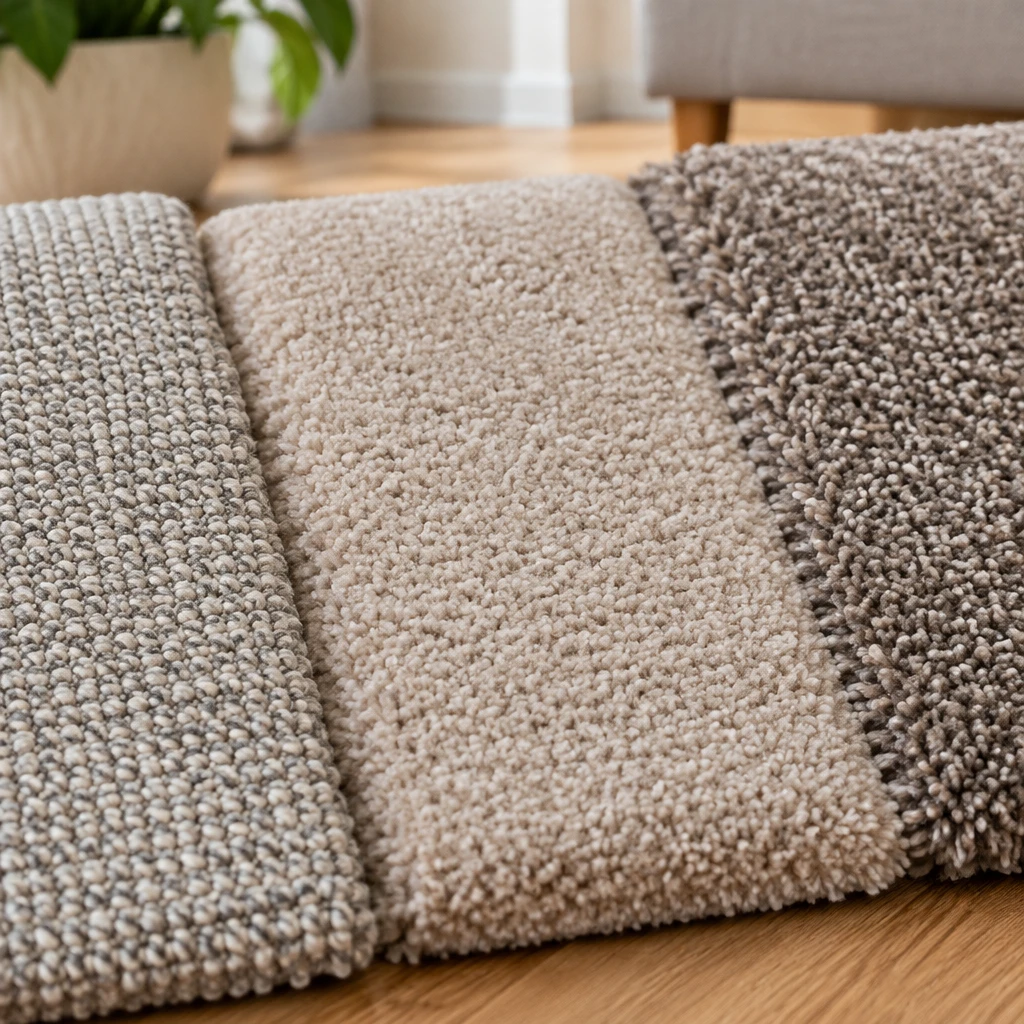
Polypropylene vs polyester vs nylon carpet is primarily a comparison of stain resistance, softness, resilience and price. Polypropylene is generally valued for practical stain resistance and affordability. Polyester often provides a soft feel and strong colour clarity while nylon is usually chosen for its resilience in busy areas.
No fibre is automatically best for every room. Carpet construction, pile density, twist level, backing, underlay and maintenance can matter as much as the fibre name. The right choice depends on where the carpet will be fitted, how much use it will receive and which types of spills or soiling are likely.
Polypropylene vs polyester vs nylon carpet at a glance
Polypropylene is a practical option for many family rooms and rental properties. Polyester suits rooms where softness, appearance and colour are priorities. Nylon is often the strongest candidate for busy corridors, offices and other areas where the pile must recover from repeated foot traffic.
Polypropylene: Good resistance to many water-based stains with a typically accessible price point but lower resilience than nylon.
Polyester: Soft with good colour performance and useful stain resistance but the pile can flatten in heavily used routes depending on its construction.
Nylon: Resilient and abrasion resistant which makes it suitable for demanding domestic or commercial settings but it may cost more and stain performance varies by treatment.
These are general fibre characteristics rather than a guarantee of performance. A dense well-constructed carpet can outperform a poorly constructed product made from a fibre that is considered stronger. Always check the manufacturer’s stated use classification, maintenance guidance and product specification.
What is polypropylene carpet?
Polypropylene is a synthetic thermoplastic fibre also known as olefin. The colour is usually added during fibre production rather than applied only to the finished surface. This process is known as solution dyeing and it can provide good colour stability and resistance to many common household stains.
Polypropylene absorbs very little water so water-based spills are less likely to penetrate the fibre itself. However, liquid can still reach the carpet backing, underlay or subfloor if it is not treated promptly. Polypropylene can also attract and retain oily soiling which means greasy marks may be harder to remove than expected.
Where does polypropylene carpet work well?
Polypropylene can work well in bedrooms, playrooms, lounges and rental homes where straightforward maintenance and budget control are important. Product suitability still depends on pile construction and the level of use. A lightweight polypropylene carpet intended for a bedroom may not perform well in a busy entrance or commercial corridor.
Polypropylene has a lower melting point than polyester or nylon so it can be damaged by friction heat, hot objects or aggressive cleaning equipment. Some polypropylene carpets are described as bleach cleanable but this does not apply to every carpet or every component. Follow the specific manufacturer’s dilution and cleaning instructions rather than assuming bleach is safe.
What is polyester carpet?
Polyester carpet is made from a synthetic polymer and is known for its soft handle, colour clarity and resistance to many water-based stains. It can provide a luxurious feel at a price below some nylon products although cost varies considerably with pile weight, density and design.
Some polyester carpets use recycled polyethylene terephthalate which is commonly called PET. Recycled content should be confirmed from the product documentation because not every polyester carpet has the same composition or environmental profile. Recycled content also does not by itself indicate how long a carpet will remain attractive in a particular room.
Where does polyester carpet work well?
Polyester is often considered for bedrooms, lounges and lower to moderate traffic areas where comfort and appearance have priority. Its natural resistance to many stains is useful in homes but oily substances can still be difficult to remove. Prompt blotting and the correct cleaning product remain important.
Polyester is generally less resilient than nylon. In a busy route between doors or around frequently used furniture the pile may show compression sooner than a comparable nylon carpet. Dense construction and a suitable underlay can improve the overall result but cannot make every polyester product appropriate for intensive use.
What is nylon carpet?
Nylon is a synthetic carpet fibre valued for resilience, abrasion resistance and its ability to recover from compression. These qualities make nylon a common option for busy homes, offices, hospitality spaces and other commercial interiors.
Nylon is not naturally as resistant to every stain as polypropylene or polyester. Many products receive stain-resistant treatments and their performance depends on the specific fibre technology and finish. Product care instructions should be checked before using spot cleaners because unsuitable chemicals can affect the fibre, colour or protective treatment.
When is nylon worth considering?
Nylon is worth considering where repeated foot traffic and pile recovery are central concerns. Examples include landings, hallways, reception spaces and open-plan offices. It may have a higher initial price than basic polypropylene or polyester options but price should be assessed alongside expected use, maintenance requirements and replacement disruption.
Not all nylon carpet is commercial grade. A product should have a stated classification that matches the intended setting. Commercial premises may also have specific requirements for fire performance, accessibility, acoustics or installation systems. Those details depend on the building, relevant regulations and project specification.
How the three carpet fibres compare in everyday use
The most useful comparison starts with the pressures the carpet will face rather than appearance alone. Foot traffic, outdoor dirt, food spills, pets, wheeled chairs and direct sunlight can all influence the decision.
Softness: Polyester is frequently chosen for a soft feel. Polypropylene can also feel soft while nylon texture varies widely by product.
Resilience: Nylon generally offers the strongest pile recovery. Polyester and polypropylene may show flattening sooner in intensive traffic lanes.
Water-based stains: Polypropylene and polyester have low moisture absorption. Nylon performance often relies more heavily on fibre treatment and prompt cleaning.
Oily soiling: Polypropylene and polyester can retain oily marks. Entrance matting and regular effective vacuuming help reduce tracked-in soil.
Colour: All three fibres are available in extensive colour ranges. Dyeing method and light exposure affect colour performance as well as fibre type.
Heat: Synthetic fibres can be damaged by hot objects. Polypropylene is particularly sensitive to heat and friction.
Price: Polypropylene is often found among lower-priced options while nylon commonly sits at a higher price point. Construction and brand can change this pattern.
Furniture indentation can occur with any carpet. Firm furniture cups, occasional repositioning where practical and appropriate underlay can help. Castor chairs may require flooring protection or a carpet designed for that use.
Why carpet construction matters as much as fibre
Fibre type only describes the raw material used in the pile. It does not reveal how tightly the carpet is made or whether it is designed for a busy room. Two carpets made from the same fibre can behave very differently.
Pile density: Closely packed fibres generally support one another better than a sparse pile.
Yarn twist: A well-twisted cut pile can retain its texture more effectively under use.
Pile style: Loop, twist and saxony constructions create different appearances and maintenance needs.
Backing: The backing affects stability and installation requirements. Compatibility with the chosen fitting method must be checked.
Underlay: Suitable underlay can improve comfort, insulation and support. The correct type depends on the carpet and subfloor.
Use classification: Domestic and commercial ratings indicate the applications for which the manufacturer has assessed the product.
Thicker is not always more durable. A tall loose pile may feel luxurious but show tracking more readily than a shorter dense pile. Face weight can provide useful context but it should not be used as the only measure of quality.
Which carpet fibre should you choose?
Choose polypropylene when affordability and resistance to many everyday water-based stains are leading priorities. It can be a sensible choice for family rooms or lower-cost refits provided the product rating suits the expected traffic.
Choose polyester when softness, rich colour and comfort matter most. It often suits bedrooms and lounges but construction should be examined carefully if the room contains a heavily used route.
Choose nylon when resilience and resistance to repeated wear are priorities. It is often suitable for busy homes and commercial interiors although the exact product must match the required usage classification and maintenance regime.
For a whole property it may be better to use different specifications in different rooms. A soft polyester carpet in a bedroom and a resilient nylon carpet in a busy workspace can be more appropriate than selecting one fibre throughout. Polypropylene may provide a practical option in rooms where frequent family use and spill management are the main concerns.
What to check before ordering fitted carpet
Compare physical samples in the property where possible. Carpet colour and texture can change under daylight, warm artificial lighting and cool commercial lighting. Viewing a larger sample also makes it easier to judge pile direction and variation.
Confirm whether the carpet is rated for the intended domestic or commercial use.
Ask about fibre content because some carpets use a blend rather than one material.
Check stain treatment details and the approved cleaning method.
Confirm compatibility with underfloor heating where relevant. The combined thermal resistance of the carpet and underlay must suit the heating system.
Assess the subfloor before fitting because moisture, movement or unevenness may require preparation.
Choose underlay based on the carpet, room and installation method rather than thickness alone.
Review fire performance documentation for commercial or managed properties where the project requires it.
A professional site assessment can identify fitting constraints that are not visible from a sample. Room dimensions, doorway clearances, subfloor condition and transitions to adjoining flooring all affect the finished installation. All Type Flooring can help domestic and commercial clients in Kent compare suitable carpet specifications and plan professional fitting.
Frequently Asked Questions
Is polypropylene carpet suitable for homes with pets?
Polypropylene can be practical where water-based spills and straightforward cleaning are concerns. Pet claws may catch on some loop piles so pile style matters as well as fibre. Urine can also reach the backing or subfloor if it is not treated promptly. Check the manufacturer’s cleaning guidance before using stain removers.
Which carpet fibre is best for allergy concerns?
No single carpet fibre is automatically allergy-free. Regular vacuuming with suitable filtration, moisture control and prompt cleaning may be more important than choosing polypropylene, polyester or nylon. Anyone with a diagnosed allergy should seek appropriate medical advice and review product information where material sensitivity is suspected.
Can synthetic carpet be fitted over underfloor heating?
Many synthetic carpets can be used with underfloor heating but compatibility depends on the carpet, backing, underlay and heating system. Check the combined thermal resistance and the heating manufacturer’s limits before installation. Site conditions and system design may require professional assessment.
Are mixed-fibre carpets better than single-fibre carpets?
A fibre blend can combine useful characteristics but it is not automatically better. Performance depends on the blend proportions, yarn construction, pile density and intended use classification. Review the complete specification and a physical sample rather than relying on the fibre list alone.
Request a carpet consultation and fitting quote in Kent.