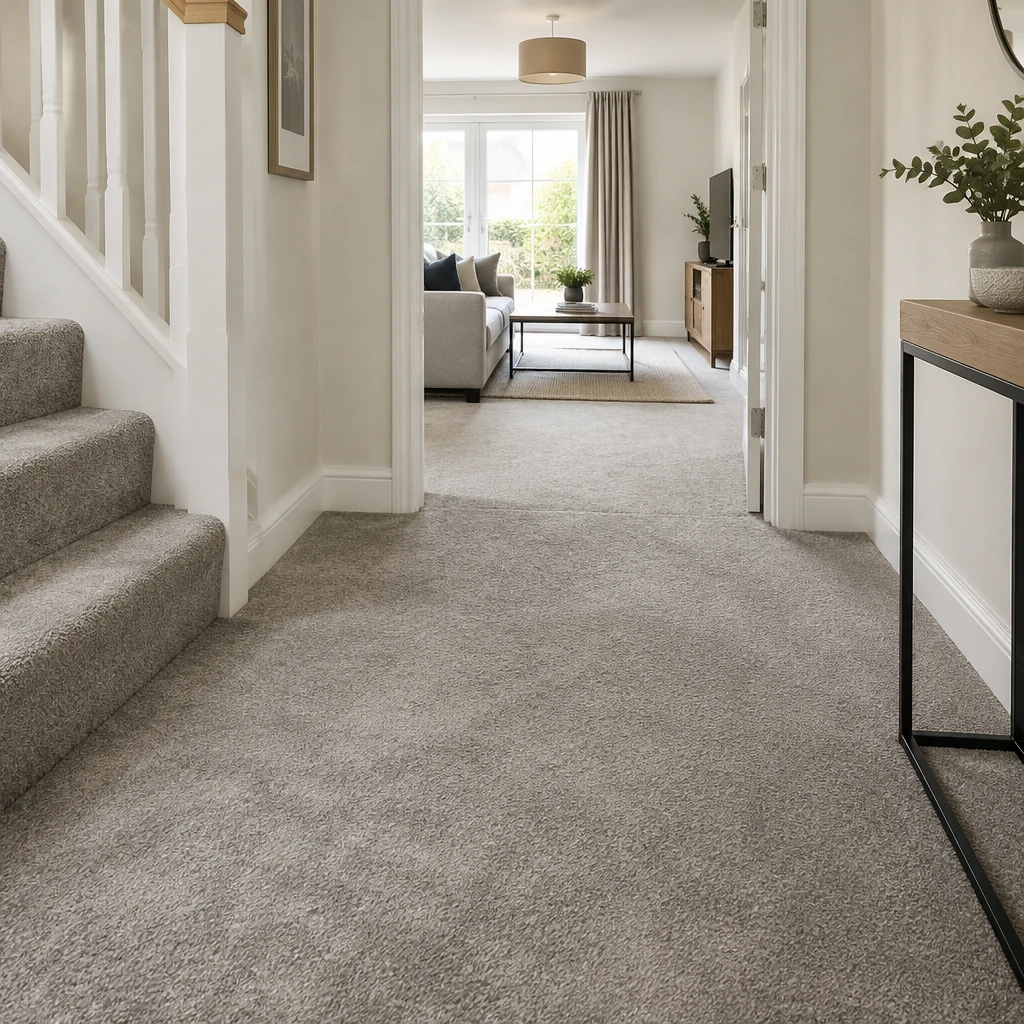
The easiest carpet to keep clean is usually a short-pile synthetic carpet with a dense construction and a colour that disguises everyday marks. Polypropylene and solution-dyed nylon are often practical choices because they resist many common household stains. However the best option depends on foot traffic, pets, the type of room and the manufacturer\’s cleaning instructions.
No carpet is completely stain-proof. Fast action after spills and regular vacuuming still matter. A carpet that suits the way a room is used will generally remain presentable with less effort than one chosen for appearance alone.
What Is the Easiest Carpet to Keep Clean?
For many busy homes a dense short-pile polypropylene carpet is one of the easiest options to maintain. Polypropylene does not absorb water readily and tends to resist many water-based stains. Some polypropylene products can be cleaned with a diluted bleach solution but this is not true of every carpet. Always follow the care guidance supplied by the manufacturer.
Solution-dyed nylon is another strong choice. Its colour is added during fibre production rather than being applied only to the surface. This can provide good colour retention and stain resistance. Nylon also tends to recover well from pressure which can make it suitable for busy areas where appearance retention is important.
The simplest answer is therefore not one specific product. It is a combination of a suitable synthetic fibre, a short pile, a dense structure and an appropriate colour.
What Makes a Carpet Easy to Maintain?
An easy-clean carpet prevents dirt from becoming deeply embedded and allows spills to be removed without complicated treatment. Several characteristics affect how much work a carpet requires.
Fibre type: Synthetic fibres usually absorb less moisture than natural wool and can be more resistant to common stains.
Pile height: Short fibres give dust and crumbs fewer places to settle.
Pile density: A closely packed surface can help stop debris moving deep into the carpet.
Colour and pattern: Mid-tones and subtle patterns tend to disguise light dust, small marks and tracked-in dirt.
Room suitability: A carpet designed for the expected level of use is less likely to become crushed or difficult to maintain.
Cleaning guidance: Clear manufacturer instructions make it easier to choose safe products and methods.
Underlay and fitting quality also affect how a carpet performs. They do not make the fibres stain-resistant but suitable underlay can support the carpet and a professional fit can reduce movement or uneven wear.
Comparing Easy-Clean Carpet Fibres
Polypropylene
Polypropylene is popular in family homes because it offers practical stain resistance at a range of price points. It is particularly resistant to water-based marks and moisture absorption. This can be useful in living rooms, playrooms and other spaces where drinks may be spilled.
There are limitations. Oily substances may be harder to remove from polypropylene and the fibre may not recover from compression as effectively as some nylon products. Suitability for a busy hallway or commercial setting depends on the carpet\’s overall construction and use classification rather than fibre alone.
Nylon
Nylon is resilient and often performs well in areas with regular foot traffic. Solution-dyed nylon can combine durable colour with good resistance to many stains. It may be a useful option for active households, offices and customer-facing spaces.
Nylon products vary. A carpet\’s stain treatment, pile density and intended use should all be checked before making a decision. Being made from nylon does not automatically make every product suitable for every room.
Polyester
Polyester generally offers good resistance to many water-based stains and is available in a wide range of colours. It can feel soft underfoot which makes it attractive for bedrooms and quieter living spaces.
Its performance under sustained heavy traffic varies by product. Polyester can also hold oily marks so kitchens and places exposed to grease may require a different flooring choice.
Wool
Wool is naturally resilient and can conceal light soiling effectively due to the structure of its fibres. However it normally requires more careful stain treatment than a synthetic easy-clean carpet. Harsh chemicals and excessive rubbing can damage wool fibres or alter their appearance.
Wool may still be the right choice where natural materials, comfort and appearance are priorities. It is simply not usually the easiest option for a household that expects frequent spills and wants the broadest choice of cleaning methods.
Why Short-Pile Carpet Is Usually Easier to Clean
Short-pile carpet is generally easier to vacuum because dirt has less depth in which to settle. Spills are also easier to reach before they spread through long fibres. This makes short-pile twist, low cut-pile and closely constructed loop carpets practical for many busy rooms.
Long and deep piles can feel luxurious but they may trap crumbs, pet hair and fine debris. Vacuuming may take longer and some vacuum heads can struggle to move through a very deep surface.
Loop-pile carpet can be durable and straightforward to maintain but it is not always ideal for homes with pets. Claws may catch on loops and pulled yarn can affect the surface. A dense short cut-pile carpet may be the safer low-maintenance option when cats or dogs are present.
Choosing Carpet for Different Rooms
The easiest carpet to keep clean depends partly on where it will be fitted. The same product may work well in a bedroom but be less suitable near an external entrance.
Living rooms: Choose a dense short or medium pile that balances comfort with easy vacuuming. A heathered or lightly patterned finish can hide everyday debris.
Hallways: Prioritise resilience, a dense construction and a product intended for heavy domestic use. Effective entrance matting can reduce tracked-in grit.
Bedrooms: Lower foot traffic gives greater freedom to choose a softer pile. Easy cleaning may still matter in children\’s bedrooms or rooms used by pets.
Dining rooms: Short synthetic fibres are generally easier to treat after food and drink spills. Prompt blotting remains important.
Offices and commercial areas: Select carpet based on expected traffic, castor-chair use and the relevant commercial classification. Carpet tiles may also allow a damaged section to be replaced but suitability depends on the site.
Carpet is not always the most practical floor for rooms exposed to regular moisture, mud or cooking grease. In these conditions LVT may be easier to wipe clean. The correct choice depends on the subfloor, room conditions and required finish.
Which Carpet Colours Hide Dirt Best?
Mid-tone carpets with mixed fibres or subtle patterns usually disguise everyday marks better than very pale or very dark plain colours. Beige, taupe, warm grey and mottled shades can conceal dust and small variations between cleaning sessions.
A light plain carpet can show muddy marks and drink spills quickly. A very dark carpet may hide some stains but reveal pale crumbs, lint and pet hair. The best colour should reflect the type of dirt most likely to enter the room.
Colour only hides soiling visually. It does not reduce the need for vacuuming or stain treatment. Sample boards should be viewed in the room because natural light and artificial lighting can change how a shade appears.
How to Keep an Easy-Clean Carpet Looking Its Best
Even a low-maintenance carpet benefits from consistent care. Dirt particles can act abrasively when walked into the pile so removing them regularly helps protect the surface.
Vacuum frequently enough for the level of use and pay particular attention to entrances or seating areas.
Use a vacuum setting and brush type approved for the carpet construction.
Blot liquid spills promptly with a clean absorbent cloth rather than rubbing them into the fibres.
Work from the outside of a mark towards the centre to reduce spreading.
Test any cleaning product in an inconspicuous area and follow the manufacturer\’s instructions.
Avoid saturating the carpet because excess moisture may affect the backing, underlay or subfloor.
Use effective entrance mats to capture grit and moisture before they reach the carpet.
Arrange professional cleaning when appropriate for the product and the level of soiling.
Different stains require different treatments. Heat can set some marks while unsuitable detergents may leave sticky residue that attracts further dirt. If the fibre type or stain source is uncertain it is safer to check the carpet\’s care information or ask a professional cleaner.
How to Choose the Right Low-Maintenance Carpet
Start by identifying the room\’s likely foot traffic and the most common cleaning challenges. A household with young children may prioritise resistance to drink spills. A pet owner may need a short cut pile that releases hair easily. A business may place greater importance on resilience and an appropriate commercial-use rating.
Ask to see carpet samples and check the fibre composition, pile structure and cleaning guidance. Product labels and technical information should confirm whether a carpet is intended for heavy domestic or commercial use. Claims such as bleach-cleanable should only be relied upon when they appear in the specific manufacturer\’s instructions.
A professional flooring consultation can help compare carpet choices against room use, subfloor conditions and budget. All Type Flooring supplies and fits carpets for domestic and commercial properties across Kent with advice based on the requirements of each space.
Frequently Asked Questions
Can carpet be cleaned with bleach?
Only carpets specifically identified as bleach-cleanable by the manufacturer should be treated this way. This feature is associated with some polypropylene carpets but the permitted dilution and method vary. Never use bleach on wool or an unidentified carpet.
Is a stain-resistant treatment permanent?
Stain resistance can vary by fibre and product. Surface treatments may become less effective through wear or unsuitable cleaning while solution-dyed fibres gain colour resistance from their construction. Check the product\’s care information rather than assuming all treatments perform in the same way.
Does carpet underlay make cleaning easier?
Underlay does not stop surface stains but a suitable underlay supports the carpet and can help reduce premature wear. The correct type depends on the carpet, subfloor and room use so the flooring supplier\’s guidance should be followed.
Should allergy sufferers avoid carpet?
Carpet can hold dust and allergens until they are removed by vacuuming. A short-pile carpet is generally easier to vacuum thoroughly than a deep pile. Individual sensitivities differ so medical advice may be appropriate where allergies are severe.
Ask All Type Flooring for help choosing and fitting an easy-care carpet in Kent.