Yes, you can usually use LVT with underfloor heating if the flooring is approved for the heating system and installed within the manufacturer\’s temperature limits. Luxury vinyl tile is relatively thin and can transfer heat effectively. However, compatibility depends on the specific LVT product, the type of underfloor heating, the subfloor construction and the proposed installation method.
Successful use of LVT with underfloor heating requires more than simply choosing a vinyl design. The complete floor build-up must be considered. This includes the heating system, screed or subfloor, any smoothing compound or underlay, the adhesive and the finished floor covering.
Is LVT with underfloor heating a suitable combination?
LVT with underfloor heating is a practical combination when both systems are designed to work together. Many glue-down and click LVT products are suitable for use over correctly controlled water-based or electric underfloor heating. The product data sheet should confirm compatibility rather than suitability being assumed.
LVT responds to temperature changes by expanding and contracting. Excessive heat or uneven heating can place stress on joints, adhesives and individual tiles or planks. Correct controls and professional subfloor preparation help the floor respond consistently.
A common maximum floor surface temperature stated by manufacturers is around 27°C. This is not a universal limit. The instructions for the selected flooring, adhesive and heating system must take priority. Some areas affected by direct sunlight or heat trapped beneath furniture may become warmer than the thermostat reading suggests.
Which types of underfloor heating work with LVT?
Both water-based and electric underfloor heating can be compatible with LVT. The important question is whether the heating system produces controlled and evenly distributed heat beneath the finished floor.
Water-based underfloor heating
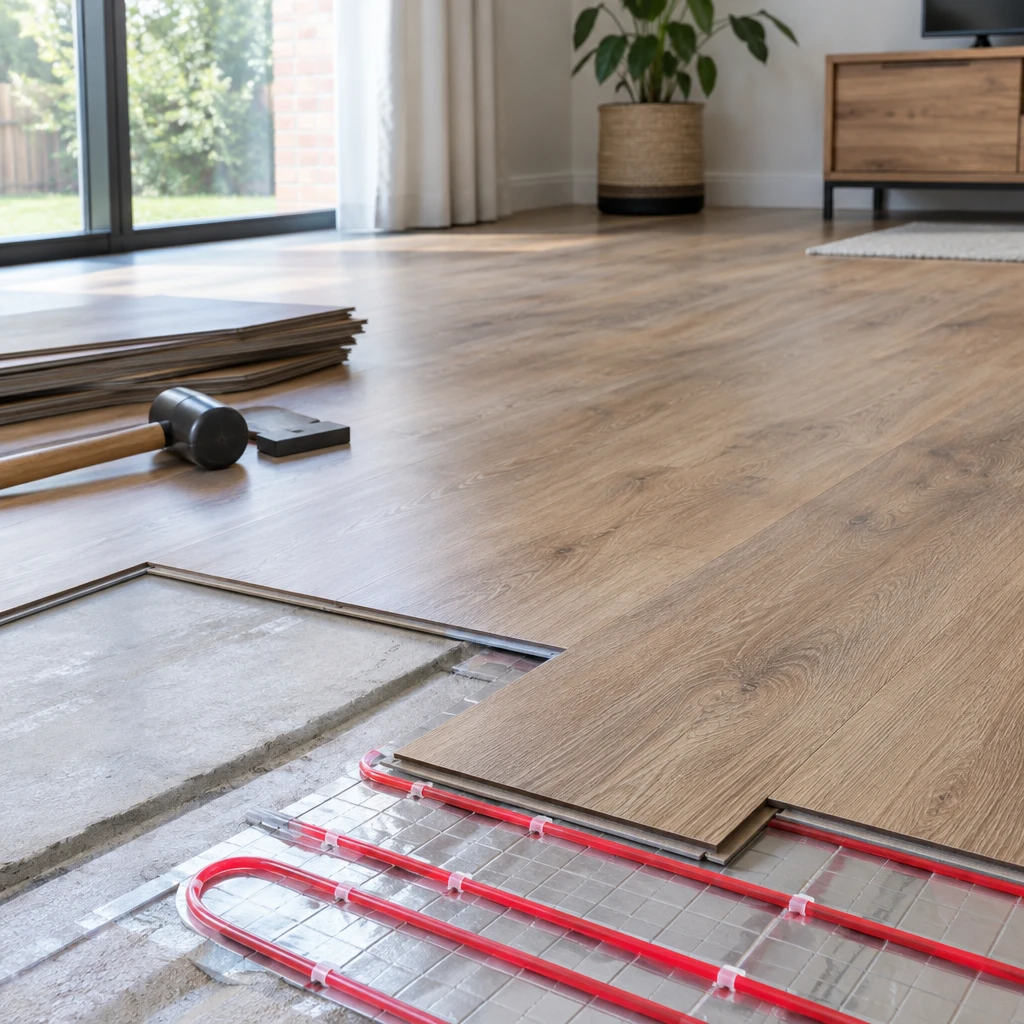
Water-based systems circulate warm water through pipes installed within or beneath the floor. These systems are often set within screed although low-profile retrofit systems are also available. LVT may be installed once the substrate is dry, stable and properly prepared.
New screed must complete the required drying and heating commissioning process before floor preparation begins. The time needed depends on the screed type, depth and site conditions. A flooring installer should test moisture levels rather than relying only on the age or appearance of the screed.
Electric underfloor heating
Electric systems use heating cables or mats. LVT should not normally be placed directly onto exposed heating wires or an uneven mat. The system generally needs to be enclosed within a suitable smoothing compound or another build-up approved by the heating and flooring manufacturers.
Electric heating can respond quickly which makes reliable temperature regulation particularly important. A compatible thermostat and correctly positioned floor sensor can help prevent excessive temperatures at floor level. Electrical installation and testing must be completed by an appropriately qualified person.
Glue-down or click LVT over underfloor heating?
Glue-down LVT often provides efficient heat transfer because it is bonded closely to the prepared subfloor. Click LVT can also be suitable but the thermal resistance of the board and any underlay must be considered as part of the complete floor build-up.
Glue-down LVT
Glue-down LVT is fitted using an adhesive approved for the product, substrate and temperature conditions. It can create a stable finish across larger spaces and allows damaged individual pieces to be addressed without dismantling an entire floating floor. Its performance relies heavily on a smooth, dry and sound subfloor.
The adhesive must be suitable for use with underfloor heating. Incorrect adhesive selection or turning the heating up too quickly can contribute to movement, gaps or loss of bond. Installation instructions may require the heating to be reduced or switched off for a stated period before and after fitting.
Click or floating LVT
Click LVT connects through an integrated locking system and is installed as a floating floor. Some products include an attached backing while others require a separate underlay. Only an underlay approved for both the LVT and underfloor heating should be used.
A thick or unsuitable underlay can slow heat transfer. The combined thermal resistance of every layer above the heating system should be checked against the heating designer\’s requirements. Expansion gaps must also follow the flooring manufacturer\’s instructions.
What must be checked before installation?
The condition of the base is as important as the LVT design. Underfloor heating will not correct moisture, movement or unevenness within a subfloor. It can make existing problems more apparent once the floor begins to experience regular heating cycles.
Product approval: Confirm that the exact LVT range is suitable for the specific type of underfloor heating.
Temperature limit: Check the maximum permitted floor surface temperature and ensure the controls can maintain it.
Subfloor moisture: Test screed, concrete or other moisture-sensitive bases using an appropriate method.
Surface condition: Make sure the base is flat, clean, stable and free from contaminants that could affect adhesion.
Heating commissioning: Complete the required commissioning cycle for new screed and heating systems before fitting LVT.
Floor build-up: Consider smoothing compounds, adhesives, underlays and other layers rather than assessing the LVT alone.
Movement provision: Follow instructions for perimeter gaps, thresholds and movement joints.
Site-specific assessment is especially important in extensions, renovated homes and commercial premises where different subfloors may meet within one area. A floor may require local repairs, moisture control or smoothing before LVT can be installed.
How should the heating be used after LVT is fitted?
Underfloor heating should be brought back into use gradually after LVT installation. Sudden temperature increases can place unnecessary stress on the flooring and adhesive. The exact waiting period and temperature sequence depend on the LVT, adhesive, screed and heating system instructions.
A floor sensor is useful because room air temperature does not always reflect the temperature directly beneath the LVT. The heating controls should prevent the floor from exceeding the permitted surface temperature.
Thick rugs, beanbags and furniture with limited airflow can trap heat over a small area. This may create a higher localised floor temperature even when the rest of the room remains comfortable. Check the LVT manufacturer\’s guidance before using insulating rugs or placing low-clearance furniture over heated areas.
Large windows also deserve attention. Strong sunlight can warm LVT independently of the heating system. In rooms with significant solar gain the heating design, thermostat position and floor covering limits should be considered together.
What can go wrong with an unsuitable installation?
Most risks are linked to excessive heat, residual moisture or inadequate subfloor preparation. Choosing a compatible product does not remove the need for correct installation and controlled operation.
Gaps or joint movement: LVT may expand and contract if temperatures change too quickly or exceed the product limit.
Adhesive problems: An unsuitable adhesive or poor preparation can lead to tiles lifting or shifting.
Visible subfloor defects: Ridges, cracks and heating mat outlines may become visible through the finished surface.
Moisture-related damage: Covering a screed before it is sufficiently dry can affect the adhesive and floor finish.
Slow heating response: A high-resistance underlay or excessive floor build-up can reduce heat transfer into the room.
Uneven temperatures: Poorly spaced heating elements or trapped heat can create hot and cold areas.
These risks are not reasons to avoid LVT. They show why the heating design, substrate and flooring specification should be agreed before installation rather than treated as separate decisions.
How to choose the right LVT for a heated floor
Start by checking technical suitability rather than choosing on appearance alone. Ask for the product\’s underfloor heating guidance, maximum surface temperature and permitted installation methods. If a separate underlay is needed, confirm its thermal resistance and compatibility.
The intended room also matters. Kitchens, open-plan living areas and commercial interiors can have different traffic levels, furniture layouts and cleaning requirements. Bathrooms need products and installation details appropriate for moisture-prone conditions. Underfloor heating suitability does not automatically make every LVT product appropriate for every room.
It is also sensible to decide where fixed units and heavy furniture will sit before the heating system is installed. Some system designs should not run beneath permanent fixtures. This depends on the heating manufacturer\’s design requirements and the property layout.
Professional LVT installation in Kent
LVT can provide a comfortable and practical finish over underfloor heating when the whole system is properly specified. The most important steps are confirming product compatibility, testing the subfloor, selecting suitable preparation materials and controlling the heating temperature.
All Type Flooring supplies and fits LVT flooring for domestic and commercial properties across Kent. A site assessment can identify the existing subfloor, proposed heating system and preparation needed before installation. Where heating design, electrical work or screed performance requires specialist input, the relevant system provider or qualified contractor should also be consulted.
Frequently Asked Questions
Can old LVT be replaced without damaging underfloor heating?
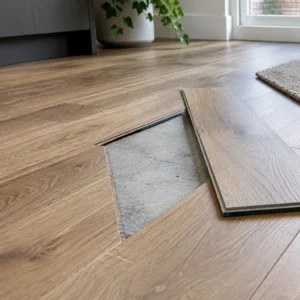
It may be possible but the method depends on whether the LVT is glued down or floating and how the heating system is enclosed. Heating cables or pipes should be mapped and tested before work starts. Careful removal and subfloor preparation are essential where heating elements are close to the surface.
Can underfloor heating be repaired after LVT is installed?
Repairs may require part of the LVT and subfloor build-up to be lifted. Access can be disruptive so the heating system should be pressure-tested or electrically tested before flooring installation. Keep photographs and system plans to help locate pipes, cables and sensors later.
Does LVT feel warm when the underfloor heating is switched off?
LVT generally feels less cold underfoot than some hard materials but it will not remain actively warm after the heating is switched off. The perceived temperature depends on the room, subfloor and insulation beneath the heating system.
Do I need a special thermostat for LVT flooring?
The thermostat must be compatible with the heating system and capable of keeping the floor within the LVT manufacturer\’s temperature limit. A floor sensor is often useful for monitoring surface-level conditions. The heating supplier or qualified installer should confirm the correct controls for the system.
Arrange an LVT flooring assessment for your Kent property.